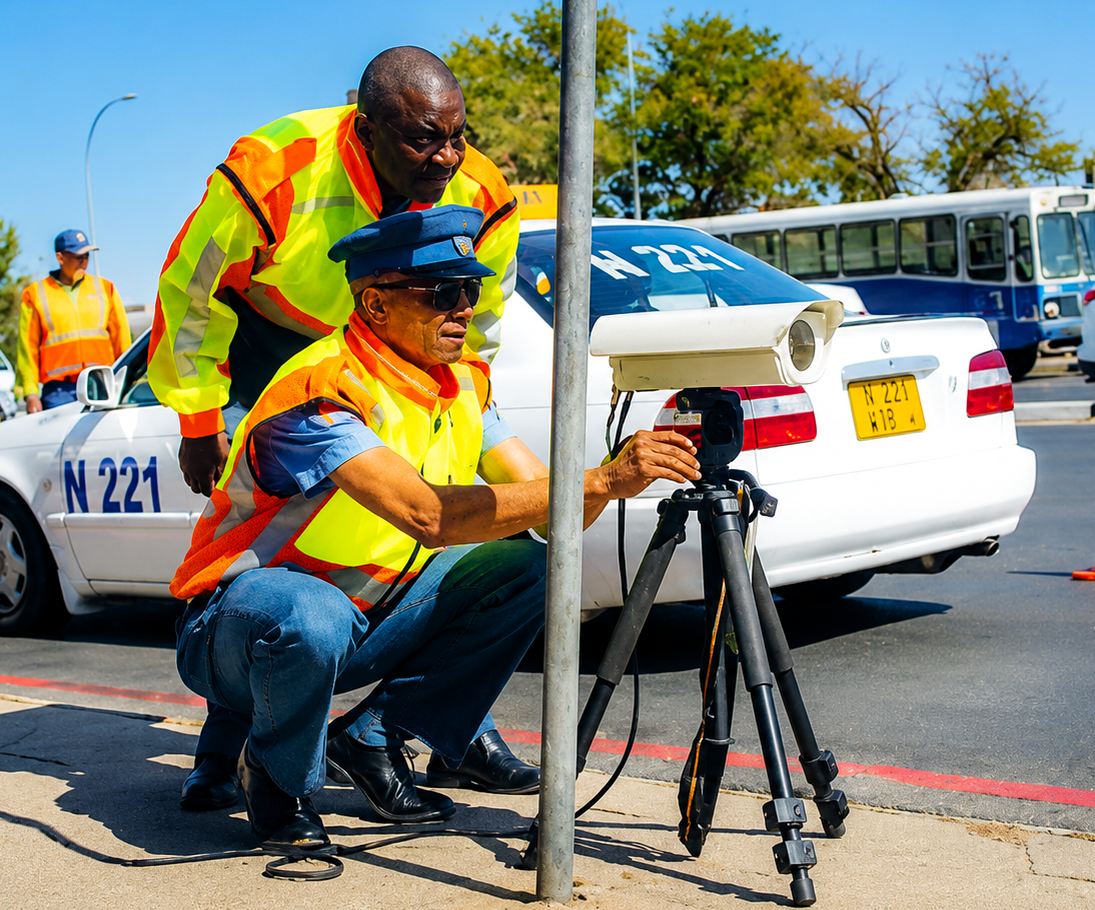
Motorists with outstanding traffic admission of guilt fines have been granted a two-month window to settle their fines after the Office of the Judiciary announced a nationwide amnesty that came into effect on Monday.
The amnesty, which runs from 3 August to 30 September 2026, applies to all outstanding traffic admission of guilt fines, including those for which the original payment deadlines have already expired. The initiative is aimed at helping motorists regularise their outstanding traffic matters while reducing the backlog of unresolved traffic-related cases.
The amnesty covers district courts across Namibia, including Windhoek, Walvis Bay, Swakopmund, Rundu, Oshakati, Keetmanshoop, Otjiwarongo, Gobabis, Katima Mulilo, Lüderitz, Outapi, Ondangwa, Tsumeb, Mariental and several other jurisdictions.
The Office of the Judiciary stressed that the amnesty applies only to the payment of outstanding admission of guilt traffic fines. Motorists are encouraged to make use of the amnesty before it expires at the end of September. Those requiring further information or assistance are advised to contact their nearest district court or the Office of the Judiciary.
Judiciary spokesperson Vikitoria Hango said members of the public can pay their outstanding fines at the district court where their Notice to Appear in Court was issued during normal working hours from Monday to Friday.
Alternatively, payments may be made via Electronic Funds Transfer (EFT) into the designated bank account of the relevant district court. “Those paying via EFT must use the summons number, found in red at the top right-hand corner of the Notice to Appear in Court, together with the name of the relevant court listed as the place of trial as the payment reference,” Hango explained.
She added that proof of payment must be submitted to the designated contact person at the relevant district court before the amnesty period expires on 30 September. “Any outstanding warrants of arrest or further court proceedings will continue to be dealt with in accordance with the Criminal Procedure Act (Act No. 51 of 1977), with the finalisation of each matter remaining subject to the direction of the presiding magistrate and the applicable legal process,” Hango said.
According to the Judiciary, the initiative forms part of broader efforts to improve compliance with traffic laws, promote road safety and enhance the efficient administration of justice by reducing the number of outstanding traffic cases before the courts.
By Rudi Bowe