Westside High School has launched a three-year “Donate-a-Brick – Build Their Future” campaign aimed at rebuilding its deteriorating boundary wall and addressing a range of infrastructure challenges affecting the school.
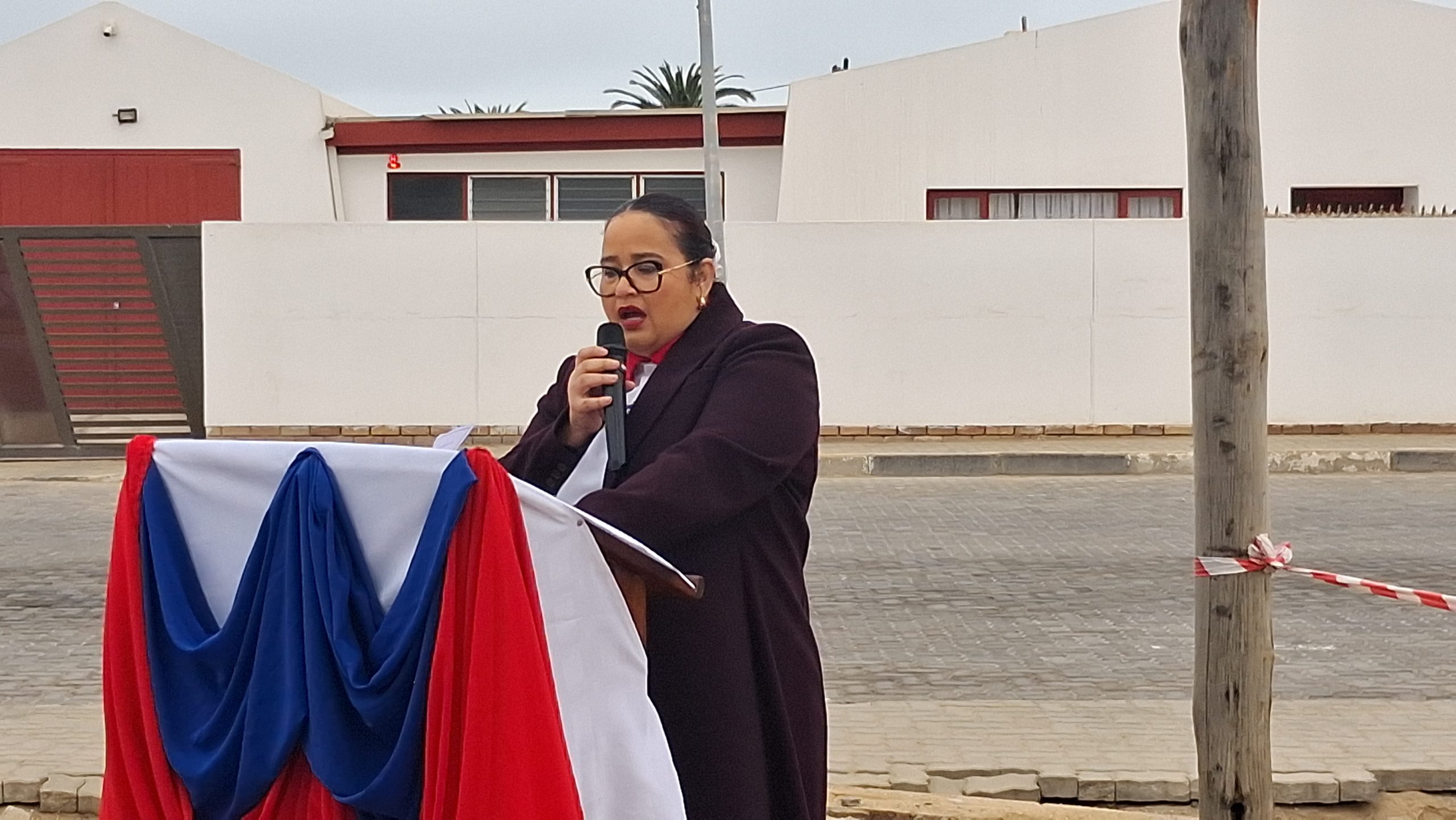
The campaign, running from 2026 to 2028, seeks to mobilise parents, alumni, businesses, government institutions, service providers and the wider community to contribute bricks, building materials, money, professional services, technical expertise and labour. The school currently accommodates approximately 1,450 learners, from pre-primary to Advanced Subsidiary (AS) level, placing increasing pressure on its ageing infrastructure. Speaking at the official launch last week, Swakopmund Mayor Suama Kautondokwa described the initiative as an important milestone for the school and called on the community to take collective responsibility for the safety and education of its children. “
A wall represents safety, stability and dignity,” Kautondokwa said, adding that a secure boundary would strengthen access control, protect school property and create a safer environment for teachers and learners. The mayor urged local businesses, alumni, service providers, corporate leaders and residents to support the campaign, whether through financial contributions, building materials, technical assistance or professional services. “Every contribution matters,” Kautondokwa said, calling for continued support until the final brick is laid. Westside High School principal Ms. Veneza Rheeder said the deteriorating boundary wall was an immediate safety concern, particularly after part of the wall had already collapsed.
She said the school was fortunate that no learners were present when the section collapsed, but warned of the potential consequences if such an incident occurred while learners were nearby. “Imagine if the small ones are sitting here waiting for their transport and it collapses on a child. What trauma can it cause us as a school community?” Rheeder asked. She explained that while the boundary wall was the immediate priority, the school faced several other infrastructure problems that required attention.
These include deteriorating roofs, loose external wall tiles, recurring electrical faults, rusted wiring, inadequate drainage and a science laboratory that is currently not fully functional due to problems with water supply, plumbing, electricity and the roof. According to Rheeder, these challenges not only affect the appearance of the school but directly interfere with teaching and learning. Westside High offers science subjects including physics, chemistry and biology, all of which require functional facilities for practical work. “We need to restore this, essentially, for a safe and effective implementation of the national curriculum,” she said.

Despite the challenges, Rheeder said the school had introduced several initiatives to make better use of its available resources. The school has introduced additional subjects, including agricultural science, elementary agriculture entrepreneurship and computer science, while offering learners opportunities to specialise in social sciences, commerce and science. With learner numbers having grown significantly, the school has also converted previously unused spaces, including garages and other facilities, into classrooms. A school feeding programme has also been established, providing daily meals to about 150 learners.
Rheeder said the school had initially been established for a much smaller learner population and had now exhausted much of its available space. “We have exhausted all the spaces because of the influx,” she said. She emphasised that the Donate-a-Brick campaign was therefore not simply about rebuilding a wall, but represented the beginning of a broader effort to restore and improve the school’s infrastructure. The campaign asks community members to contribute according to their means. The school has also encouraged learners to participate by contributing towards the symbolic cost of a brick. Rheeder stressed that learners should not take construction materials from building sites or other properties when attempting to support the campaign. The school is also appealing to its alumni to reconnect with their former school and play a role in improving conditions for current and future learners. “We are not asking one individual or one organisation to carry the entire project,” Rheeder said. “We are asking each stakeholder to contribute according to their ability and their areas of expertise.” Technical support has already been provided by the Namibian Institute of Mining and Technology (NIMT), which assisted the school with initial planning, technical guidance and consideration of the proposed boundary wall design.
School Board Chairperson Agatha Setler said NIMT was regarded as one of the school’s principal technical stakeholders and that the school looked forward to its continued involvement. She said contributions could include financial support, bricks, cement, sand, transportation, labour, professional expertise and technical services. “Every contribution, regardless of size, will be used and will take us closer to the achievement of our goals,” Setler said. She also assured stakeholders that the school board would ensure financial and material contributions were formally recorded, received and accounted for, with progress communicated throughout the campaign.
The school is calling on the wider community to see the project as a shared responsibility. “The success of this campaign will be measured not only by today’s ceremony but by the partnership established and the commitments fulfilled thereafter,” Setler said. For Westside High, the campaign represents an effort to restore the school’s infrastructure while creating a safer and more conducive environment for the thousands of learners who depend on it. As Rheeder put it, “One brick may appear small, but when many bricks are brought together through proper planning, skilled labour and a shared purpose, they form something strong and lasting.”
By Sharlien Tjambari