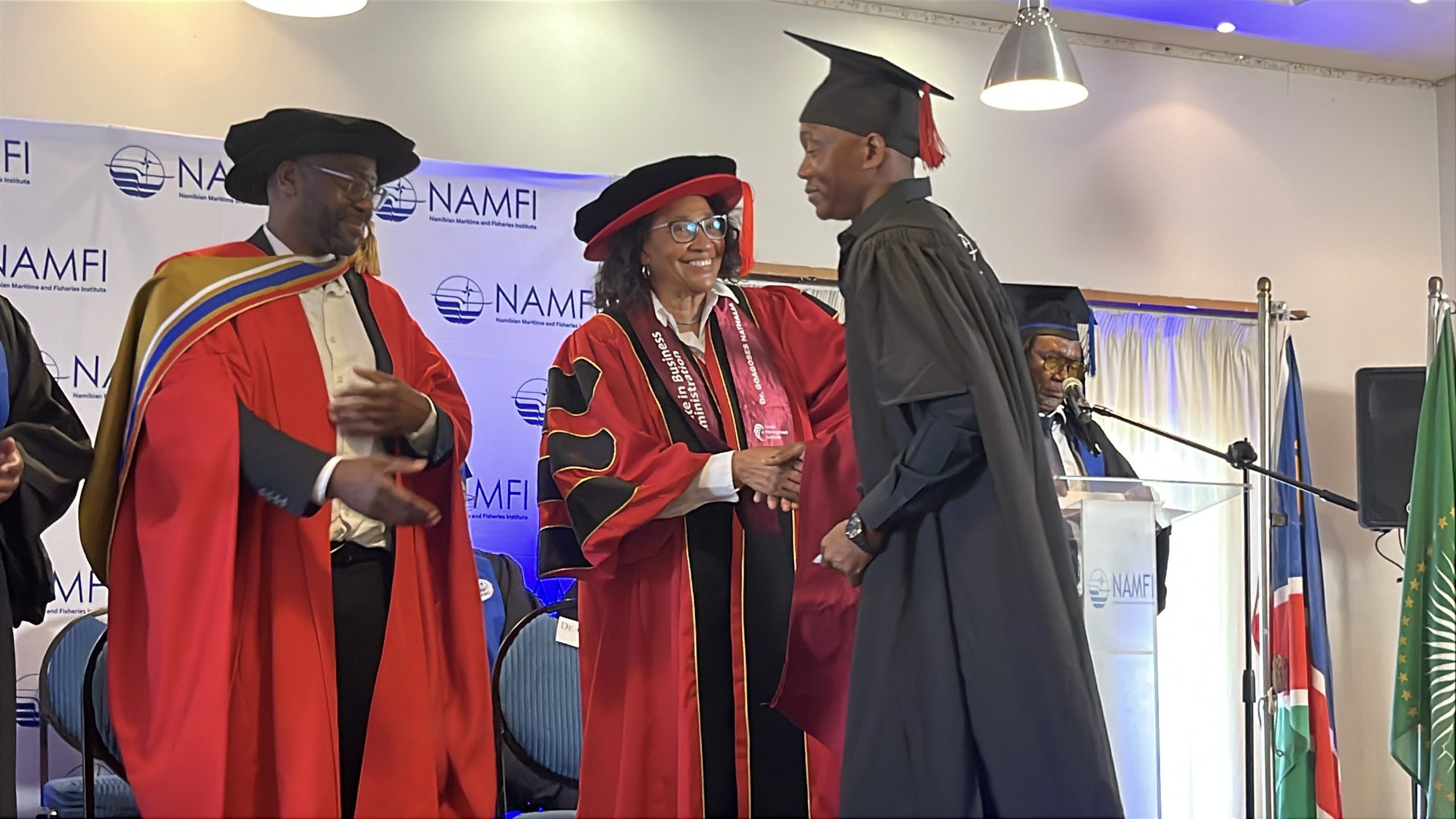
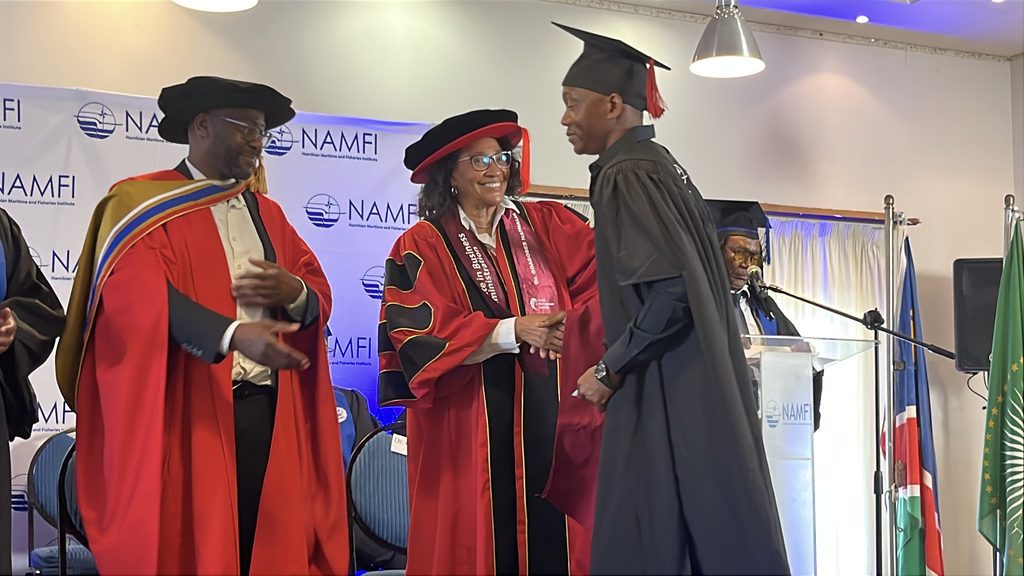
A total of 41 students graduated from the Namibian Maritime and Fisheries Institute (NAMFI) in Walvis Bay on Friday, as the institution celebrated 30 years of developing skilled professionals for Namibia’s maritime industry.
As NAMFI marks three decades of maritime training, the graduation ceremony highlighted both the importance of developing local expertise and the need for strong institutional leadership to support Namibia’s growing maritime ambitions. The graduates completed qualifications in marine navigation, marine engineering, fishing vessel operations and other specialised maritime courses. The graduates included approximately 10 students with diplomas in marine navigation for fishing vessel operations, seven Deck Officer Class 5 graduates and eight Officers in Charge of Navigational Watch.
A further 10 students completed diplomas in marine engineering for fishing vessel operations, while six graduated in the Able Seafarer Engine course. Speaking at the ceremony, held under the theme “Navigating the Future: Empowering Maritime Professionals for Excellence, Safety and Sustainable Growth”, Erongo Governor Dr Natalia /Goagoses congratulated the graduates, saying their qualifications would strengthen Namibia’s ability to capitalise on opportunities in fisheries, shipping, port operations, logistics and emerging offshore industries. She stressed that Namibia should increasingly rely on its own skilled professionals rather than importing expertise. Acting Director Meriam Mwiya urged graduates to place safety, discipline and responsibility at the centre of their professional careers. She said technical knowledge alone was not enough in an industry where sound judgement and responsible conduct could mean the difference between life and death at sea. Mwiya said the graduating class represented an important investment in Namibia’s ambition to become an industrialised economy through skills development.

Mwiya encouraged graduates to put their newly acquired knowledge into practice and continue upgrading their qualifications. “Skills and knowledge remain skills and knowledge if they are not applied. It is now for you to make full use of these skills that you have acquired by applying them,” she said. She further urged them to prioritise safety as they enter the maritime industry and to continue upgrading, upskilling, reskilling and relearning to become masters in their respective fields.
By Rudi Bowe