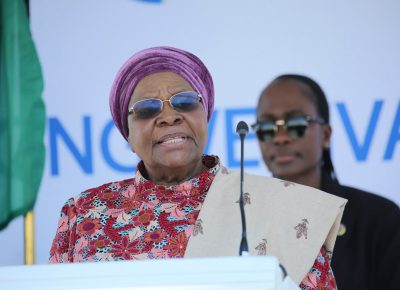

Government has increased funding for the Students with Disabilities Grant Programme (SWDGP) from N$1 million in 2019 to N$12.4 million for the 2026/2027 financial year, Vice President Lucia Witbooi has announced.
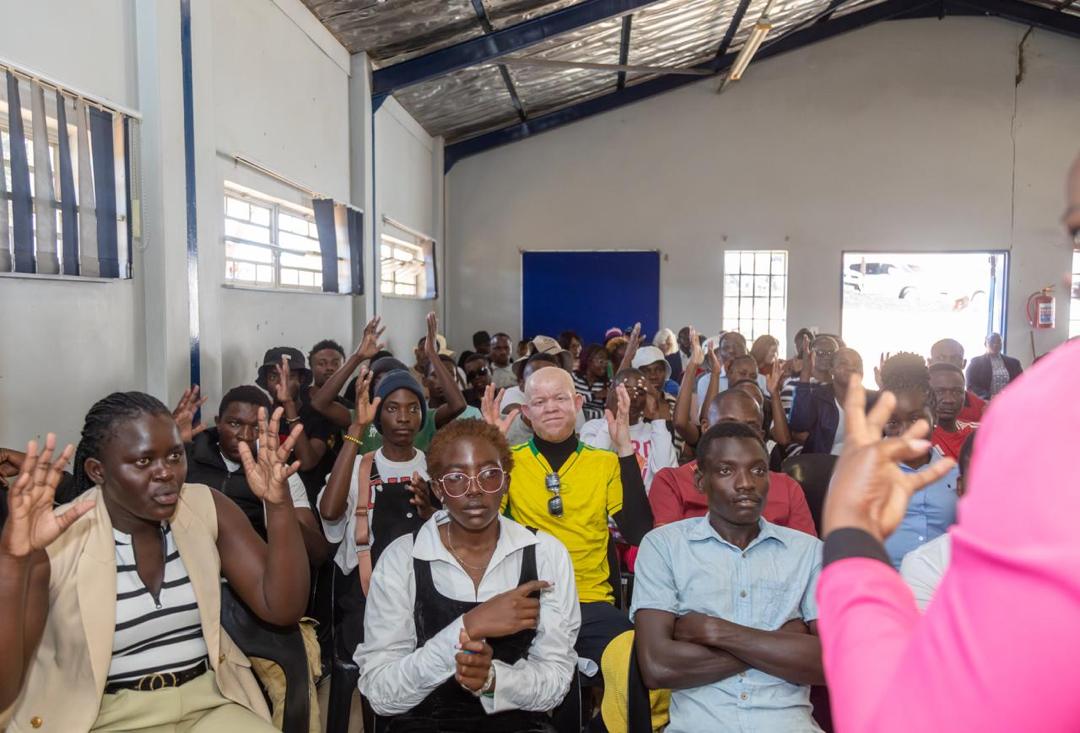
Witbooi made the announcement during a consultative meeting with students benefiting from the programme at the Okuryangava Disability Resource Centre in Windhoek. She said the increase demonstrates Government’s commitment to inclusive and equitable access to higher education for persons with disabilities and is aligned with the priorities of the Sixth National Development Plan (NDP6).
Since its establishment in 2018, the programme has benefited 689 students. The SWDGP was introduced in fulfilment of Namibia’s obligations under Article 24 of the United Nations Convention on the Rights of Persons with Disabilities, which promotes equal access to tertiary education, vocational training, adult education and lifelong learning. Namibia ratified the Convention and its Optional Protocol in 2007.
The programme is implemented through a Memorandum of Understanding between the Office of the President and the Namibia Students Financial Assistance Fund (NSFAF). NSFAF handles awards, contracts and payments, while the Office of the President provides funding and oversees the identification, application, assessment and approval processes.
Witbooi said Government has deliberately allocated funding for students with disabilities and students from marginalised communities because of the additional barriers they can face in accessing higher education.
She also highlighted the programme’s provision for reasonable accommodation, including specialised support to enable students with disabilities to participate fully in their studies.
“This demonstrates that the Government is committed not only to providing financial support, but also to ensuring equal participation, dignity and inclusion,” Witbooi said.
She pointed to the revised National Policy on Disability 2025–2035, adopted and launched in October 2025 with a costed implementation plan. The policy is aligned with the UN Convention and promotes the inclusion of persons with disabilities in education, employment, healthcare and public services.
Government support also includes a N$4 500 Funeral Benefit Grant and the Student Support Programme, which assists with tuition, transport, accommodation and reasonable accommodation. Support can include specialised wheelchairs, sign-language interpreters, laptops and other equipment.
Witbooi said education and skills development remain essential to empowering persons with disabilities and preparing them for meaningful participation in the labour market. She urged beneficiaries to take their studies seriously, use the support responsibly and work hard to complete their qualifications.
She also encouraged eligible students to use National Disability Council of Namibia programmes, including opportunities through NAMCOL to improve their points and access further education.
“Above all, I encourage all stakeholders to continue working together to remove barriers, promote inclusion and create meaningful opportunities and ensure that no student or person with a disability is left behind,” Witbooi said.
By Rudi Bowe