Erongo Governor Natalia /Goagoses has called for greater local participation and skills transfer in the N$84 million Kuiseb Collector 2–Schwarzekuppe–Swakopmund pipeline rehabilitation project, while NamWater says it is advancing plans to establish a pipe manufacturing plant in Namibia to reduce infrastructure costs and create jobs.
Speaking at the launch of the pipeline rehabilitation project on Wednesday, /Goagoses urged contractors to ensure Namibian small and medium enterprises (SMEs) benefit from procurement opportunities linked to the project. “I want the Namibian SMEs to be part of this construction,” she said, adding that involving local businesses would promote ownership of national infrastructure while contributing to job creation and economic growth.
/Goagoses said local suppliers should receive a share of the project’s N$84 million value, arguing that income earned from such contracts would enable businesses to grow, create employment and improve the livelihoods of Namibians. She also stressed that contractors should employ Namibians for unskilled and semi-skilled positions and ensure local workers receive practical training from experienced foreign engineers. “For too long, I have been observing that we are not benefiting from the skills that we are getting from our friendly countries, like China and Germany,” she said. She encouraged young Namibian engineers and technical graduates to understudy Chinese engineers working on the project, saying the experience would help build the country’s engineering capacity and reduce reliance on foreign expertise in future infrastructure projects.
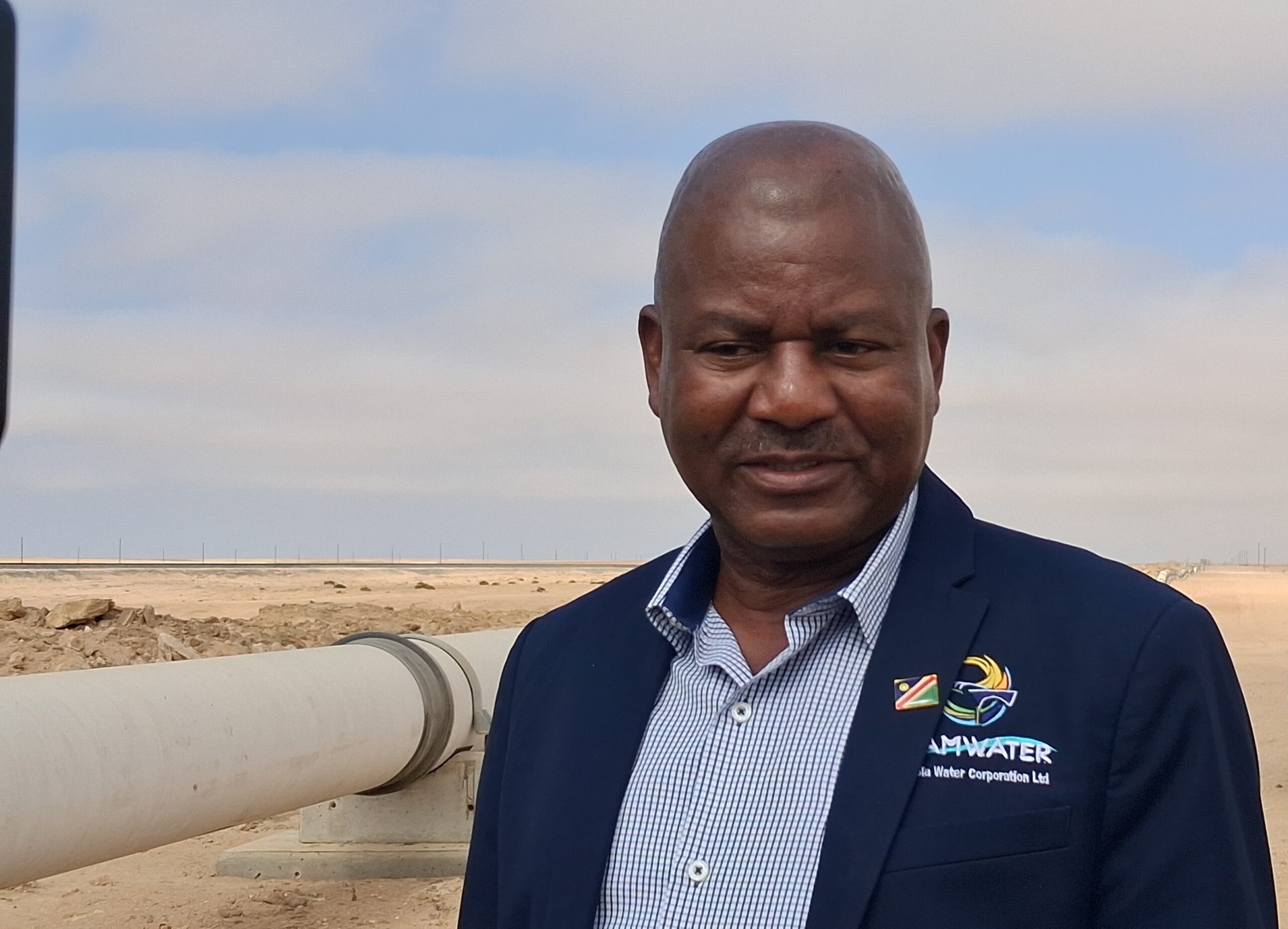
According to /Goagoses, projects of this nature should leave behind a skilled workforce capable of designing and constructing similar infrastructure in the years ahead. Supporting the Governor’s call for greater local value addition, NamWater Chief Executive Officer Abraham Nehemia said the biggest cost component of large pipeline projects is the procurement of pipes, which are currently imported because Namibia does not manufacture large-diameter pipeline materials. “Most of the money goes to the materials that we need, which are mostly the pipes,” Nehemia said. He said NamWater is at an advanced stage of engaging partners to establish a GRP (Glass Reinforced Plastic) pipe manufacturing plant in Namibia, a move expected to reduce construction costs, shorten procurement timelines and accelerate infrastructure delivery.

At present, the utility waits up to three months for imported pipes to arrive before construction can proceed. “When the pipes are manufactured in the country, that’s going to save a lot of costs and time,” he said. Nehemia said the proposed factory would also create employment opportunities while positioning Namibia to supply pipes to neighbouring countries, including Angola and Zambia. He said Erongo is being considered as the preferred location because of its strategic logistics advantages and port access. Nehemia added that lowering infrastructure costs would ultimately benefit consumers. “The cheaper the infrastructure, the lower the tariffs,” he said.
The nine-kilometre pipeline rehabilitation project forms part of efforts to strengthen water security for the Erongo Region by replacing ageing infrastructure and improving the reliability of water supply to the coast.
By Sharlien Tjambari