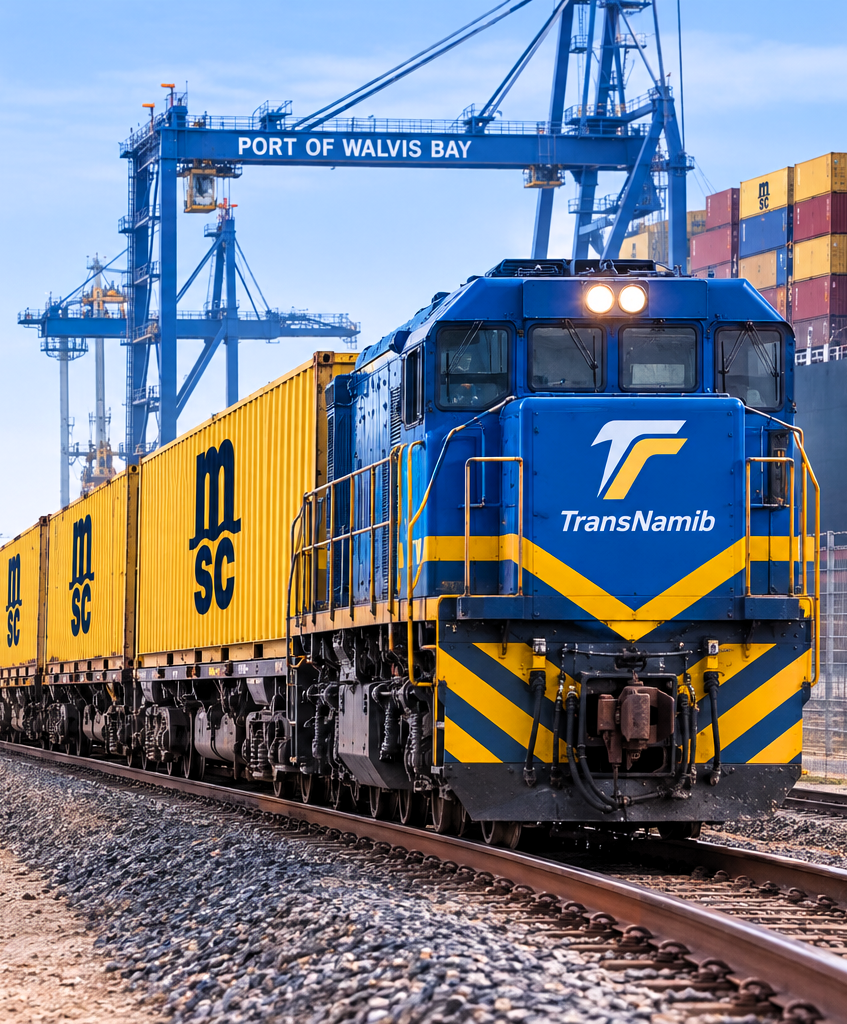
MSC Cargo to Shift From Road to Rail by November
TransNamib expects container cargo from global shipping giant Mediterranean Shipping Company (MSC) to begin moving by rail from November this year, marking a major step in the country’s drive to shift freight from roads onto the railway network.
The move is expected to gradually transfer existing road-based cargo to rail while also opening the door for new freight volumes to be transported by train. The main corridor expected to benefit initially is Walvis Bay–Windhoek, with potential expansion towards Grootfontein and Tsumeb as rail capacity improves. TransNamib estimates that one fully loaded train can carry the equivalent of approximately 35 truckloads, highlighting the potential impact of a successful road-to-rail shift on Namibia’s heavily used road network.
The company said increased rail freight could contribute to improved road safety, lower carbon emissions and reduced pressure on road infrastructure. However, TransNamib cautioned that the shift may not immediately translate into fewer trucks on Namibian roads, particularly as overall freight demand continues to grow. The company’s objective is instead to steadily increase rail’s share of national freight movement and provide customers with an efficient, reliable and sustainable alternative to road transport. TransNamib said it has not conducted a formal study quantifying the specific road-safety benefits of moving freight to rail. Nevertheless, its Road-to-Rail Strategy includes continued engagement with government and industry stakeholders to strengthen rail’s role as Namibia seeks to position itself as a regional logistics hub.
A major obstacle remains the capacity of TransNamib’s ageing fleet. To address this, the company has secured a N$2.6 billion loan from the Development Bank of Namibia and the Development Bank of Southern Africa to acquire and refurbish additional rolling stock. The procurement process is reportedly in its final stages before being submitted to the Central Procurement Board of Namibia. In the meantime, TransNamib plans to bring in leased locomotives to boost freight capacity while the longer-term procurement programme is finalised. The company also called for a supportive policy and regulatory environment to encourage the movement of bulk and breakbulk cargo by rail and strengthen Namibia’s multimodal transport system. TransNamib believes a stronger rail network could reduce long-term pressure on roads while improving the efficiency of freight movement across the country.
The planned MSC cargo shift comes as Namibia seeks to strengthen its position as a regional logistics and trade hub, with the Port of Walvis Bay playing a central role in connecting the country to international markets. For TransNamib, the challenge now is turning the road-to-rail strategy into sustained action – backed by adequate rolling stock, reliable services, modern infrastructure and cooperation between government and the private sector. If successful, the November launch could mark an important turning point in Namibia’s freight industry, putting more cargo on rail and taking some of the pressure off the country’s roads.
By Rudi Bowe