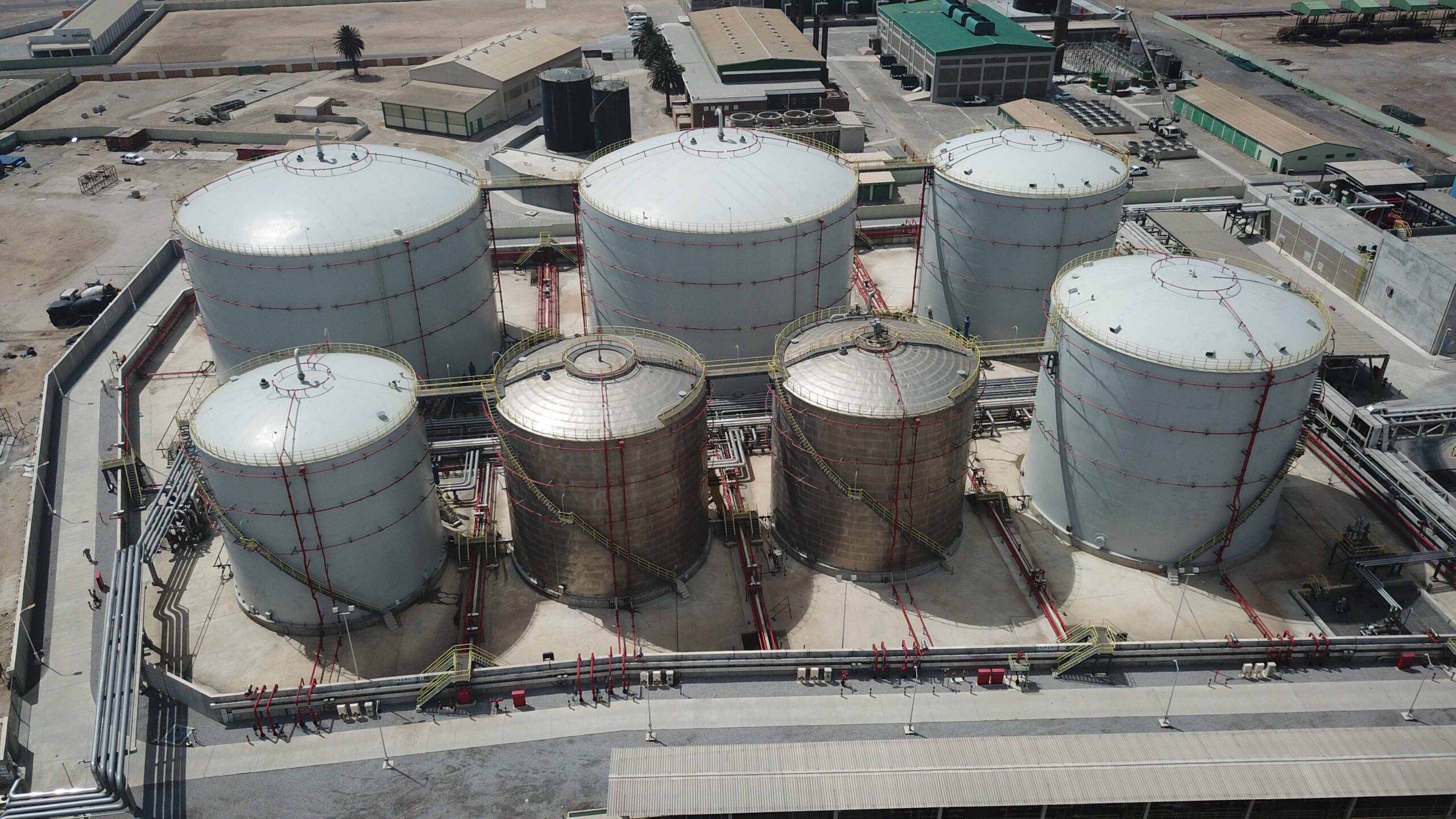
Petroleum storage terminal at Walvis Bay: NAMCOR (Photo for illustrative purposes only)
Plans for a major petroleum storage terminal at Walvis Bay are moving into the stakeholder consultation phase, with Dangote Industries Namibia Ltd set to engage the public and interested parties on 23 September 2026.
The proposed development involves the subdivision of approximately 70 hectares of industrial land at Farm 58, creating six development parcels that will form the footprint for a future petroleum storage complex. The planned terminal, with a storage capacity of approximately 1.6 million barrels of refined petroleum products, is expected to strengthen Namibia’s fuel storage capacity while potentially expanding Walvis Bay’s role as a regional energy and logistics hub.
The facility is also being positioned to support the distribution of fuel to landlocked markets in the region, including Botswana, Zambia and Zimbabwe, with southern parts of the Democratic Republic of Congo also identified as a potential market. The project comes as Namibia continues to pursue stronger trade and transport links with neighbouring countries. Proposed infrastructure such as the Trans-Kalahari Railway could further strengthen connections between Walvis Bay and regional markets, particularly for bulk commodities and energy products. However, the proposed terminal remains at an early environmental approval stage and is not yet ready for construction. According to the Environmental Scoping Assessment, the current environmental application relates specifically to the proposed subdivision of the Farm 58 property.
Construction of the petroleum storage facility will require a separate and comprehensive Environmental Impact Assessment (EIA) to be completed and approved. The subdivision would include the six development parcels, as well as areas reserved for public roads and municipal purposes. The Walvis Bay consultation will therefore provide stakeholders with an opportunity to raise concerns, seek clarification and provide input on the proposed land development and its potential environmental and socio-economic implications. The project forms part of Dangote Industries’ broader strategy to expand the reach of refined petroleum products from its 650 000-barrel-per-day refinery in Nigeria into African markets.
If ultimately approved and constructed, the Walvis Bay terminal could significantly increase petroleum storage capacity at Namibia’s main port and strengthen the town’s position within the regional fuel supply chain. The stakeholder consultation takes place on 23 September, marking an important next step before the project can progress towards detailed environmental assessment and, ultimately, construction.
By Rudi Bowe