Nandi-Ndaitwah orders faster reform, local processing, tougher quota controls and greater accountability.
President Netumbo Nandi-Ndaitwah has delivered a blunt warning to Namibia’s fishing industry and Government: business as usual is no longer an option. Closing the 2026 National Fisheries Indaba, the President called for sweeping reforms to a sector she said can no longer be managed in isolated compartments, insisting that science, governance, enforcement, investment, employment, value addition, data and administration must work as one system.
“If one system is weak, the whole system will collapse,” she said.
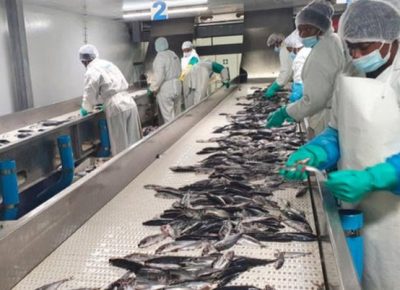
The President said discussions at the Indaba had confirmed the urgent need to base management of Namibia’s marine resources on science, particularly as evidence shows some fish stocks are under severe pressure. She singled out horse mackerel, describing the stock as being under distress despite its importance for domestic consumption and employment.
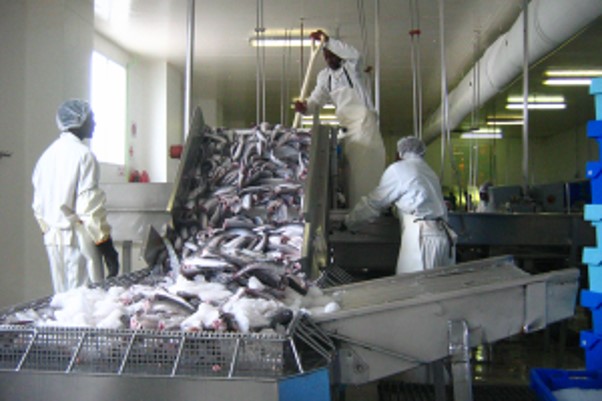
Nandi-Ndaitwah said this creates a difficult policy challenge: Namibia must protect depleted stocks while ensuring that workers dependent on the industry are not simply left behind. One of her strongest demands was an end to offshore processing. “Let everything be landed, land it, process it, go and market it internationally,” she said, arguing that Namibia cannot afford to have machines processing fish at sea while people remain unemployed onshore.
The President said landing catches locally would create opportunities in processing and allow workers affected by declining fish stocks to be absorbed elsewhere in the value chain. She also raised concerns about the loss of scientists from the public service, warning that Government should not assume people leave only because of salaries. The working environment and whether professional expertise is valued also matter, she said, stressing that scientific advice must be respected and acted upon.
On ownership, Nandi-Ndaitwah said Namibia must strike a balance between attracting foreign investment and protecting national interests. She warned against the resale of fishing rights granted to Namibians and called for safety nets to prevent the repeated loss of national fishing rights. “Namibia must guard against the undiscriminatory sale of your rights,” she said.
The President also took aim at transparency and by-catch, warning that Government may be forced to introduce a policy under which 100% of by-catch goes to the State if the situation does not improve.
Such revenue, she said, could help fund more vessel inspectors, potentially allowing inspectors to be rotated frequently to strengthen monitoring. Nandi-Ndaitwah further announced that many fishing rights are due to expire toward the end of 2026 and during 2027, with Government preparing to review which rights should be renewed and under what conditions. She instructed that the review panel should comprise neutral people outside the usual Ministry structures, but with sufficient industry understanding to provide credible recommendations. And she demanded that the process be completed on time. “The delays that have been going on in our system have to come to an end,” she said.
For Nandi-Ndaitwah, the ultimate test will not be another policy document. It will be implementation.
“I’ve talked enough and now I really want implementation,” she said.
The President said she expects that by the same time next year Namibia should be firmly in the process of implementing fisheries reforms.
“Reform comes with bitterness,” she acknowledged, warning that change inevitably brings resistance and uncertainty.
But, she said, change is necessary.
The message from State House was unmistakable: protect the fish, protect the jobs, protect Namibia’s ownership, and finally put reform into action.
By Rudi Bowe