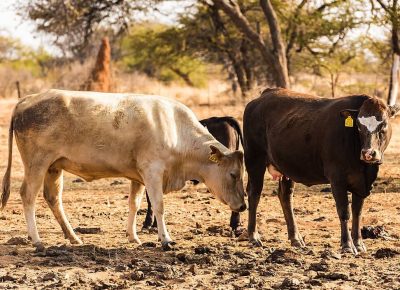
Namibia’s foot-and-mouth disease (FMD) outbreak in the //Kharas Region remains confined to the Karasburg State Veterinary District, with 131 positive cases recorded across 18 infected farms as authorities intensify vaccination, surveillance and livestock movement controls.
The Directorate of Veterinary Services, (DVS) confirmed that, as of 28 October 2026, the outbreak involved the SAT 1 serotype, first confirmed in the region on 23 September. Authorities continue to conduct trace-back and trace-forward investigations through the Namibia Livestock Identification and Traceability System (NamLITS) to track potential exposure and limit further spread.
The compulsory vaccination campaign began on 17 October, with 19 vaccination teams deployed to cover approximately 13 000 cattle. By 28 October, a total of 7 402 cattle had been vaccinated across 81 farms.
Vaccination targets farms and establishments south of the B3 road, stretching from Ariamsvlei to Grünau, and the C10 road leading to Ai-Ais, extending southwards to the Orange River. The designated area also includes a buffer zone covering two farms north of the B3 road.
Surveillance has shifted to areas north of the B3 road to strengthen early detection beyond the vaccination zone. The second round of surveillance is under way, with 10 farms inspected and sampled so far.
Meanwhile, FMD confirmed on Kalala Island in the Zambezi Region on 6 October remains confined to the island, according to the DVS.
By 28 October, authorities had vaccinated 53,913 cattle across 37 crush pens within a 30-kilometre radius of the affected area, including surrounding areas.
No new cases have been reported outside the designated Disease Management Area (DMA), while active surveillance continues to monitor the situation and detect any potential spread. Roadblocks at Luhonono and Nakabolelwa remain operational and are jointly manned by veterinary officials and the Namibian Police Force to enforce livestock movement restrictions.
Across the //Kharas, Hardap, Khomas and Otjozondjupa regions, 18 stationary roadblocks and veterinary checkpoints remain operational to enforce prescribed livestock movement controls.
By Rudi Bowe