The Anti-Corruption Commission (ACC) has called for greater transparency and tighter oversight of Namibia’s fisheries sector, warning that weak controls and secrecy could cost the country millions in revenue, undermine fair competition and erode public trust.
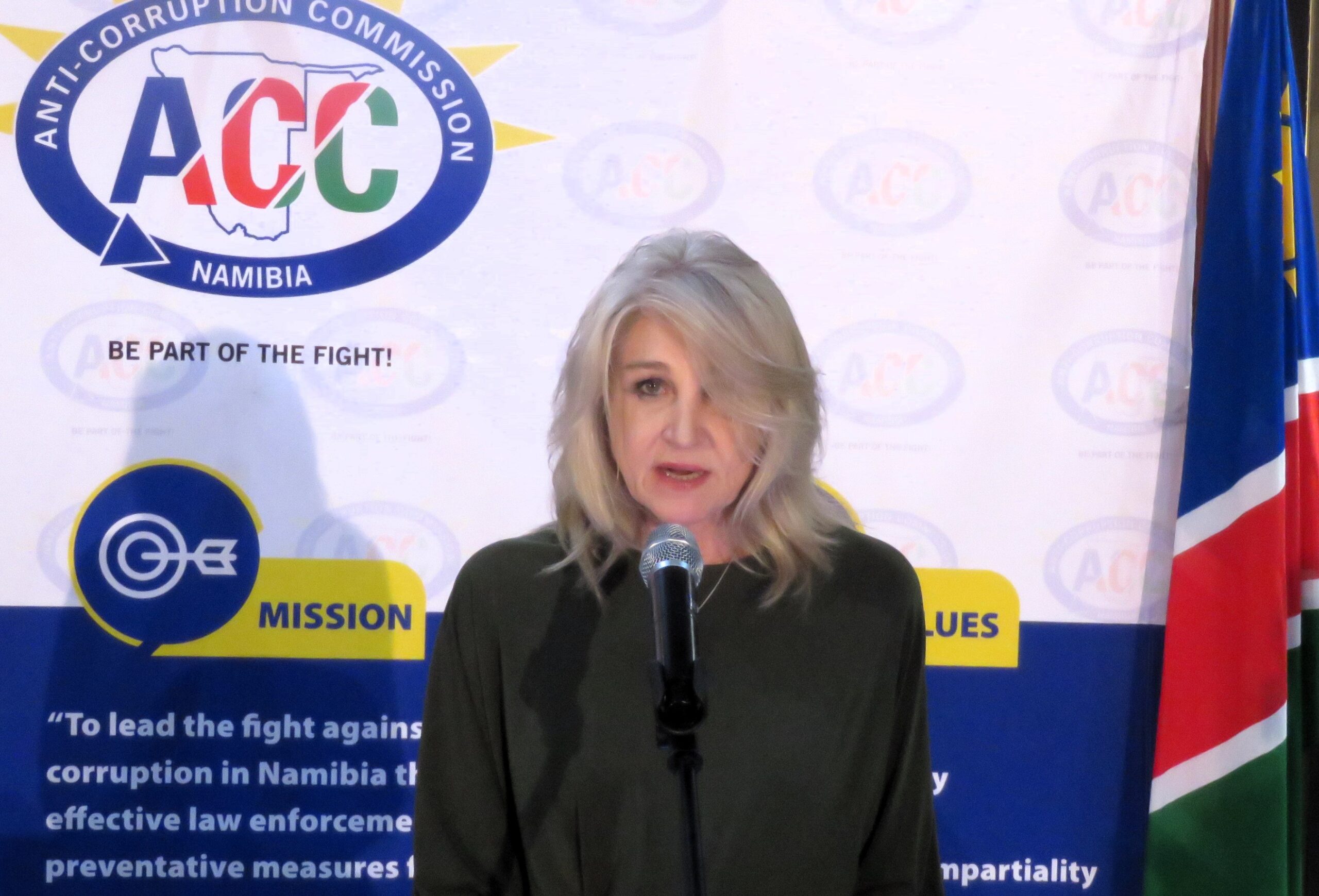
ACC Deputy Director-General Advocate Erna van der Merwe made the call at the opening of a five-day Corruption Vulnerability Risk Assessment Workshop for the Ministry of Agriculture, Fisheries, Water and Land Reform.
Van der Merwe described fisheries as one of Namibia’s most important national assets, contributing significantly to economic growth, employment, food security and foreign exchange earnings.
However, she warned that the sector remains particularly vulnerable to corruption as fish stocks become scarcer and fishing activities and financial transactions involve multiple jurisdictions, public institutions and private-sector players.
She pointed to the significant administrative discretion involved in fishing licences and quota allocations, coupled with varying levels of transparency and oversight, as potential gateways for corruption across the fisheries value chain.
Drawing on the United Nations Office on Drugs and Crime’s “Rotten Fish” guide, Van der Merwe highlighted risks including bribery in licensing and quota allocation, manipulation of catch records, bribery of inspectors and customs officials, trade fraud, false sustainability certification and the mislabelling of illegally sourced products. “Integrity in this fisheries sector is a matter of public and national interest,” she said.
Van der Merwe warned that corruption in the sector can result in lost state revenue, distorted competition, declining investor confidence and weakening public trust in government institutions.
She said the Fishrot scandal had demonstrated the consequences of secrecy and inadequate transparency within fisheries administration. “After Fishrot we now know that the lack of transparency and the secrecy in which the Ministry responsible for fisheries then functioned facilitated corrupt practices and schemes and made detection far more difficult,” she said.
Against this background, Van der Merwe called for stronger implementation of international and regional measures designed to improve transparency and accountability in fisheries governance.
She also placed particular emphasis on beneficial ownership transparency, especially where fishing vessels and companies are held through complex corporate structures, shell companies, flags of convenience and offshore entities.
Among the measures she proposed was the publication of information on right holders, quota recipients and licence holders, including their beneficial owners, as well as the establishment of beneficial ownership registers.

She further recommended publishing total allowable catches and the scientific basis for quota decisions, reviewing broad discretionary powers provided under the Marine Resources Act, and considering Namibia’s participation in the Fisheries Transparency Initiative (FiTI).
The five-day assessment will examine policies and procedures, decision-making processes, documentation systems, conflict-of-interest controls, stakeholder interactions and accountability mechanisms within fisheries management.
Van der Merwe stressed that the exercise was not about assigning blame, but about identifying vulnerabilities and developing practical measures to strengthen institutions and prevent corruption.
She urged participants to engage openly, challenge assumptions, raise concerns and focus on solutions that can be implemented and monitored.
The ACC, she said, remains committed to supporting mitigation measures, strengthening internal controls, promoting ethical conduct and enhancing accountability across the sector. “Prevention is more effective and less costly than responding after corruption or mismanagement has already occurred,” Van der Merwe said.
She added that stronger fisheries governance ultimately benefits all Namibians by protecting jobs, safeguarding state revenue and ensuring that the country’s marine resources remain available to future generations.
The workshop is also expected to support the implementation of Namibia’s National Anti-Corruption Strategy and Action Plan, Vision 2030, Harambee Prosperity Plan II and the country’s National Development Plans.
Van der Merwe concluded by urging stakeholders to uphold transparency, accountability, fairness, professionalism and responsible stewardship of Namibia’s marine resources.
She also thanked the United Nations Development Programme (UNDP) for supporting the workshop through the EU-funded Good Governance Project.
By Rudi Bowe