Government is preparing to overhaul Namibia’s N$14 billion fishing industry, demanding greater Namibian ownership, increased local investment, more onshore processing and better access to affordable fish for domestic consumers.
The reform agenda, unveiled by Minister of Agriculture, Fisheries, Water and Land Reform Inge Zaamwani at the National Fisheries Indaba in Walvis Bay on Friday, signals a tougher approach to how Namibia’s marine wealth is harvested, processed and distributed.
Zaamwani said the country could no longer measure the success of the fishing industry simply by the wealth it generates, but by how much of that wealth translates into jobs, businesses, food security and prosperity for Namibians. “The true measure of our N$14 billion industry is not the wealth it generates, but the dignity and prosperity it secures,” she said.
At the heart of the proposed reforms is a push to retain more value inside Namibia — from ownership of vessels and fishing operations to processing, packaging, employment and domestic consumption.
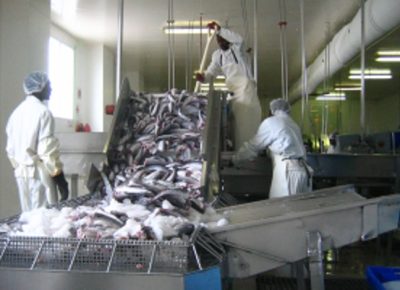
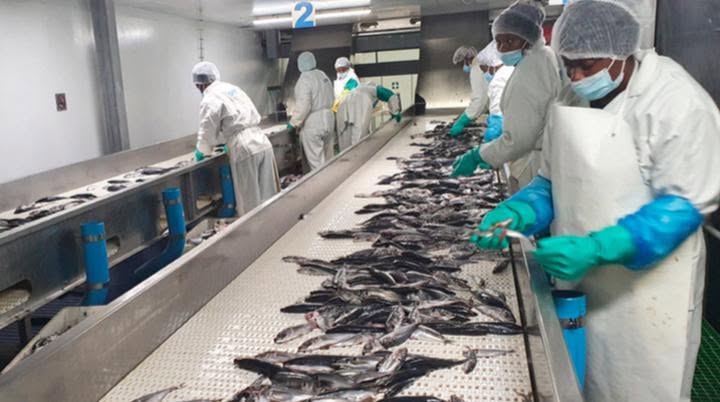
Zaamwani singled out onshore processing as a critical weapon against poverty and inequality along the coast. “Onshore processing is our most powerful weapon against coastal poverty and structural inequality,” she said.
Under the proposed approach, the quota allocation system could be redesigned to reward companies that demonstrate significant investment in Namibian factories, jobs, processing capacity and packaging.
Government also wants commercial fishing licences to be restricted to vessels with significant Namibian majority ownership and operating under the national flag. The reforms would mark a significant shift towards ensuring that Namibia captures a larger share of the economic value generated from its marine resources instead of allowing benefits to flow primarily from harvesting activities.
But Zaamwani warned that economic transformation would be meaningless without protecting the resource itself. She said some fish stocks were under significant pressure, requiring immediate action to prevent ecological damage from undermining the entire industry.
“The future of our fishing industry depends on the health of our marine ecosystems,” she said.
Government wants fisheries management to be anchored firmly in science, with researchers and advisory institutions providing long-term scenarios showing the consequences of different catch and management decisions.
The proposed reforms would also introduce clear biological “red lines” into fisheries policy and legislation. If stocks fall below safe levels, these thresholds could trigger immediate reductions in catches. Zaamwani said any decision by government to depart from scientific advice would have to be publicly justified.
The minister also warned that the Benguela Current system is facing growing environmental pressure, including marine heatwaves and low-oxygen events.
She said climate information must become a central part of fisheries management, with changing ocean temperatures and oxygen levels taken into account when determining sustainable catches of species such as hake and horse mackerel.
Government is simultaneously committed to protecting 11% of Namibia’s Exclusive Economic Zone by 2030, including potentially declaring scientifically identified ecologically or biologically significant areas as marine protected areas.
Modern monitoring and surveillance technology will also be used to strengthen the fight against illegal, unreported and unregulated fishing.
Beyond exports and industrial profits, government wants the fishing sector to play a bigger role in feeding Namibians. The proposed reforms seek to make locally caught fish more affordable and accessible in domestic markets, bringing food security into the centre of fisheries policy.
Zaamwani said the diagnostic phase of the reform process had been completed following a four-month review involving scientific research, stakeholder consultations and industry analysis. T
echnical Working Groups have now completed their recommendations, with government expected to move towards policy decisions and implementation. “Our task today is not to revisit the evidence, but to convert that evidence into action,” Zaamwani said.
She challenged government and the industry to move beyond consultation and deliver concrete reforms. “We have the evidence. We have the political commitment and sovereign capacity. Let us demonstrate the courage to decide and the discipline to implement,” she said.
Government’s mesaage is that Namibia’s marine resources must generate greater value for Namibians, but that value will only endure if the fish stocks themselves survive.
By Rudi Bowe