Is Walvis Bay ready to join a select group of global destinations recognised for protecting whales and dolphins?
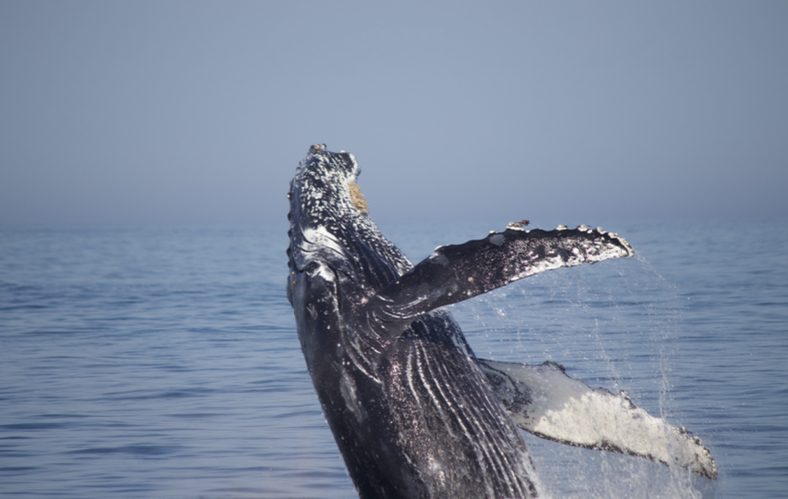
Photo: Humpback whales regularly perform playful ‘breaches’ in and around Walvis Bay (Photo: Mirco Kriess)
The coastal town, long known for its lagoon and birdlife, is now drawing attention for another reason, its growing number of visiting whales and the possibility of turning this natural asset into a globally recognised conservation success.
Speaking to the Namib Times, Damian Schreiber, a publicist, educator, seal rescuer and junior researcher with Ocean Conservation Namibia, said the concept of Whale Heritage Sites is part of a global initiative led by the World Cetacean Alliance. “These sites recognise destinations where people can experience whales and dolphins in the wild in a responsible and eco-friendly way,” he explained. While humpback whales are increasingly being spotted in and around Walvis Bay, often thrilling observers with dramatic breaches, Schreiber emphasised that their presence alone is not enough. “There are currently only ten recognised Whale Heritage Sites worldwide, with three in South Africa,” he said. “But having whales in the area is only one part of the criteria.” To qualify, a destination must show strong environmental protection, enforce responsible whale-watching practices, support research and education, and build a culture that values marine conservation. Walvis Bay, however, still has ground to cover.
Schreiber noted that while MarWise guidelines exist to regulate whale watching, they are not consistently followed. “This leads to too many boats around whales, vessels getting too close, and inconsistent speeds that can disturb their natural behaviour,” he said. Work is underway to improve this. He pointed to ongoing efforts by Andries Brummer and Simon Elwen, who are engaging with government ministries to develop formal Whale Watching Regulations. “This is a key step if Walvis Bay wants to move closer to meeting the requirements,” he added. Beyond regulation, building a stronger marine conservation culture remains essential. “It’s about creating awareness and getting schools and communities involved. It takes collective effort,” Schreiber said. He added that tour guides, researchers and organisations like Ocean Conservation Namibia are already contributing through education and hands-on conservation work, including responding to stranded or distressed whales as part of the Namibian Cetacean Stranding Network. At the same time, future developments could influence the outcome. Schreiber noted that expansion plans by Namport, particularly in sectors such as oil, may play a decisive role. “Much of what we hope to achieve depends on these developments and the decisions that follow,” he said. For now, the question remains open. Walvis Bay may not yet meet all the criteria, but the conversation around protecting its whales is gaining momentum. And that, Schreiber suggests, is where it begins.
By Eileen van der Schyff