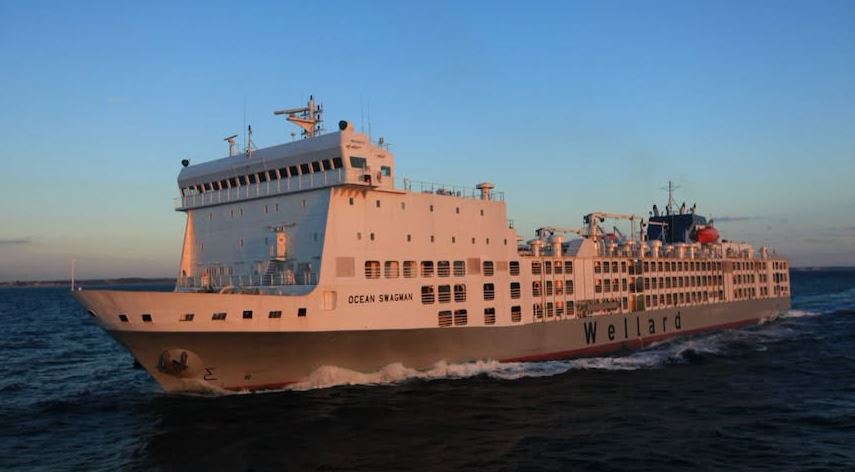
Livestock carrier Ocean Swagman ahead of their journey to Walvis Bay for export to Mauritius
Namibia’s live-animal export industry has received a significant boost following the arrival of the Singapore-flagged livestock carrier Ocean Swagman at the Port of Walvis Bay, marking the resumption of livestock exports to Mauritius after a temporary suspension triggered by the country’s foot-and-mouth disease (FMD) outbreak.
The vessel arrived in Walvis Bay on Thursday and has moved alongside Berth 7 to begin loading operations. The shipment comprises approximately 2 500 cattle and 3 600 small stock with an estimated combined value of N$32.5 million destined for Mauritius. The Ocean Swagman was expected to depart on Friday, 13 November. The consignment marks the resumption of livestock exports to Mauritius after import permits were suspended in September following Namibia’s foot-and-mouth disease (FMD) outbreak.
Mauritius officially reopened its market to Namibian livestock on 26 October after determining that veterinary conditions had been met and no new positive FMD cases had been reported since mid-October. The animals assembled for export were sourced and quarantined at Kilo 40 Farm north of Otjiwarongo before being transported to Walvis Bay. According to information provided by authorities, the livestock had been assembled before the outbreak was reported in the //Kharas Region on 23 September and remained under quarantine throughout the period of movement restrictions.
The animals reportedly tested negative for FMD, allowing Namibia’s Directorate of Veterinary Services (DVS) to issue the necessary movement permits. Mauritius also issued the required import permits, alongside Namibia’s veterinary export authorisation. Ministry of Agriculture spokesperson said Namibia had facilitated exports of cattle, sheep and goats to Mauritius in compliance with veterinary requirements and restrictions imposed to contain the spread of the disease.

Namibia has continued to facilitate exports of cattle, sheep and goats despite ongoing FMD outbreaks in the //Kharas and Zambezi regions, relying on disease-control measures, movement restrictions and veterinary certification to ensure compliance with importing countries’ requirements. The reopening of the Mauritian market is regarded as a significant development for Namibia’s livestock sector. Mauritius increasingly turned to Namibia as a source of livestock after South African live cattle exports to the island nation were affected by their own FMD-related challenges.
While the shipment provides an important boost for producers and exporters, it has also reignited debate around veterinary safeguards, quarantine procedures and the continued export of live animals during an active disease-control period.
By Rudi Bowe