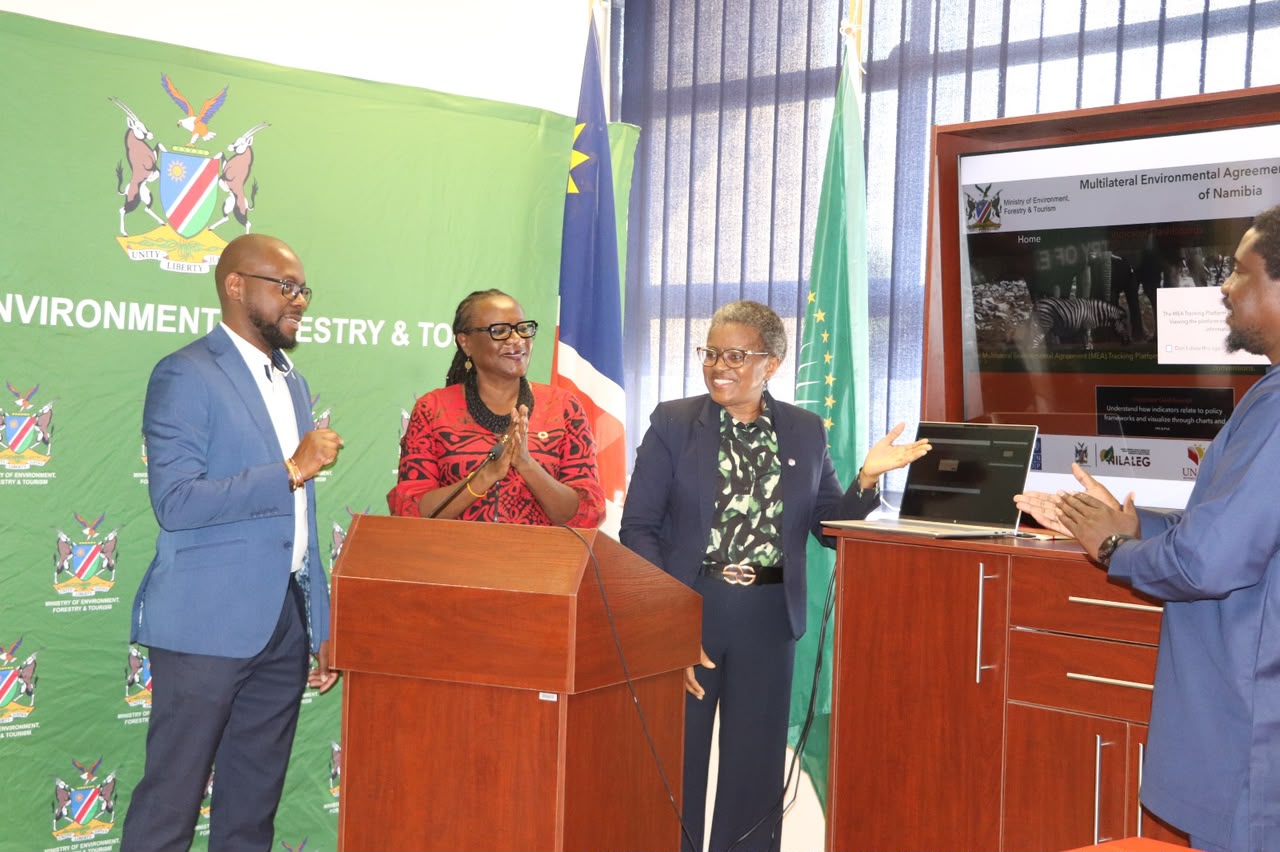

The Ministry of Environment, Forestry and Tourism (MEFT) has launched Namibia’s Multilateral Environmental Agreements (MEA) Monitoring and Reporting Platform, a new digital system designed to strengthen environmental governance, improve data management and support evidence-based decision-making.
Delivering the keynote address at the launch, Minister Indileni Daniel described the platform as a significant milestone in Namibia’s efforts to meet its national and international environmental commitments.
She said the platform will centralise environmental data, making it easier for government, researchers and policymakers to monitor progress, identify gaps and produce accurate national reports on biodiversity, climate change, land degradation and other environmental priorities.
Daniel noted that the initiative reinforces Namibia’s constitutional responsibility to protect the country’s ecosystems and biodiversity while ensuring that international environmental obligations are reflected in national policies, planning and budgeting.
The platform was developed by the Ministry of Environment, Forestry and Tourism with technical support from the University of Namibia (UNAM) and backing from the Namibia Integrated Landscape Approach for Enhancing Livelihoods and Environmental Governance (NILALEG) Project, the United Nations Development Programme (UNDP) and the Global Environment Facility (GEF). The Namibia University of Science and Technology (NUST) and other research institutions also contributed to its development.
The Minister said the platform strengthens collaboration between government and academia by creating opportunities for students and researchers to contribute to national development. It will also support advanced research in biodiversity conservation, climate change, sustainable land management and natural resource governance.

She added that the platform will play a key role in implementing Namibia’s biodiversity strategy, climate change policy and national action plans to combat desertification, while positioning the country as a regional leader in environmental information management and innovation.
Daniel called on government agencies, civil society organisations, the private sector and international development partners to actively contribute data, align research with national priorities and invest in building technical capacity to ensure the platform remains relevant and effective.
She stressed that the success of the initiative will depend on continued collaboration and regular updates, ensuring it remains a living resource long after the completion of donor-funded projects.
Officially launching the platform, Daniel said it represents an important step towards greater accountability, stronger partnerships and transforming environmental information into practical action for sustainable development.
By Rudi Bowe