Namibia is emerging as a key player in a rapidly evolving global energy landscape, with the potential to anchor a new Southern African energy corridor, United States Ambassador Randy Berry Giordano said on Tuesday evening.
Speaking at a reception hosted by the U.S. Embassy on the eve of the Namibia International Energy Conference, Ambassador Giordano highlighted the country’s growing strategic importance as global supply chains shift and demand for reliable energy intensifies.
Addressing industry leaders, policymakers, and media representatives, Giordano said the next phase of global industrial development will depend not only on access to natural resources, but on the ability to integrate energy, infrastructure, and critical minerals into reliable systems. “It is the difference between potential and power,” he said.
The ambassador drew parallels with the United States’ own development, noting that infrastructure had been central to transforming natural resource wealth into sustained economic growth. “Infrastructure didn’t follow growth. It enabled it,” he said, adding that a similar dynamic is now taking shape in Southern Africa. Giordano identified three key factors positioning Namibia at the centre of this shift.
These include its significant deposits of rare earth minerals and uranium, its emerging oil and gas sector, and its established export-oriented infrastructure network. Namibia is currently the world’s third-largest producer of uranium, placing it at the heart of global nuclear fuel supply at a time when demand for stable, baseload electricity is rising. At the same time, inter-national energy companies such as Chevron, Shell, and ExxonMobil are actively assessing offshore oil and gas discoveries, supported by major oilfield service providers.
However, Giordano stressed that Namibia’s potential lies not in these elements individually, but in their alignment. “This is not a collection of pro-jects. It is the early formation of a system,” he said. He described Namibia as a “strategic node” within a broader Southern African energy corridor, capable of linking mineral re-sources, offshore energy production, and infrastructure into an integrated platform supporting global sup-ply chains.
The ambassador also pointed to the growing influence of artificial intelligence on global energy demand, arguing that future economic competition will depend on the ability to deliver energy and resources at scale. “The AI race will not be won in data centres alone. It will be won in power plants, ports, and supply chains,” he said. To fully realise this potential, Giordano outlined three priorities: clear and predictable regulatory frameworks, alignment between governments and industry, and adherence to internationally trusted standards. Looking ahead, he reaffirmed the United States’ intention to partner with Namibia in developing reliable energy systems and infra-structure.
He said the U.S. aims to bring together in-vestment, technology, and expertise in collaboration with countries that uphold the rule of law. “This is where resources become systems – and systems scale,” Giordano said. The reception was co-hosted by the American Bureau of Shipping and forms part of engagements leading up to the conference, which brings together global energy stakeholders to discuss opportunities in Namibia and the wider region.
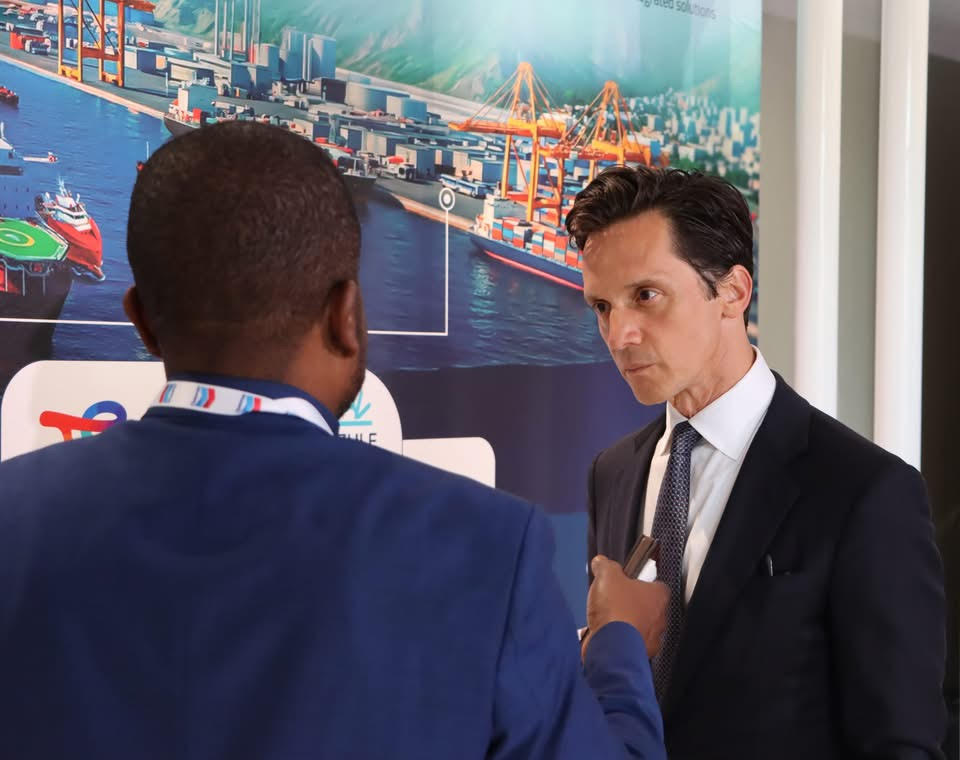
Photo caption: Ambassador Giordano at U.S. Embassy Reception on the Eve of the Namibia International Energy Conference
By Eileen van der Schyff