Namibia is set to make history later this year when it becomes the first African country and only the third nation in the world to host a major international nuclear monitoring simulation organised by the Comprehensive Nuclear-Test-Ban Treaty Organisation (CTBTO).
The Integrated Field Exercise (IFE) 2026, scheduled to run from 5 October to 20 November, will test the international community’s ability to detect and investigate suspected clandestine nuclear explosions. The exercise will take place in the Erongo Region, covering an extensive area stretching from the Khan River and Khan Mine to the Rössing Mine and the Valencia project. Headquartered in Vienna, Austria, the CTBTO is the United Nations organisation responsible for verifying compliance with the Comprehensive Nuclear-Test-Ban Treaty through a global network of monitoring stations designed to detect nuclear explosions anywhere in the world.
Officials have stressed that the exercise is entirely simulated and will involve no nuclear material or actual explosions. Instead, participants will work with artificially generated data and realistic scenarios to evaluate international monitoring systems, inspection procedures and operational readiness. As preparations gather pace, an interministerial committee led by Deputy Director Bufelo Lushetile has been visiting communities in Walvis Bay, Swakopmund and Arandis to inform residents about the exercise and address any concerns.
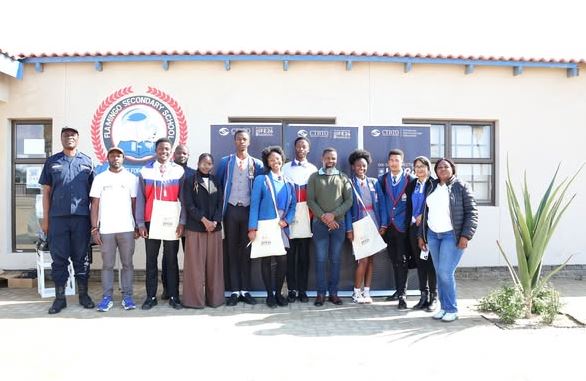
The outreach programme has also included engagements with school learners and students to highlight career opportunities within the fields of nuclear monitoring, earth sciences and international verification. To ensure the public remains informed throughout the seven-week operation, government will establish a dedicated media centre to provide daily briefings and updates on the progress of the exercise. The hosting of IFE 2026 is regarded as a significant milestone for Namibia, reflecting growing international confidence in the country’s ability to support large-scale scientific and technical operations.
It also places the Erongo Region at the centre of a globally important exercise aimed at strengthening international efforts to prevent nuclear weapons testing and promote global security. While the operation will attract experts and observers from around the world, authorities have reassured the public that the exercise poses no danger to residents or the environment, as it is based entirely on simulated scenarios and verification procedures.
By Rudi Bowe