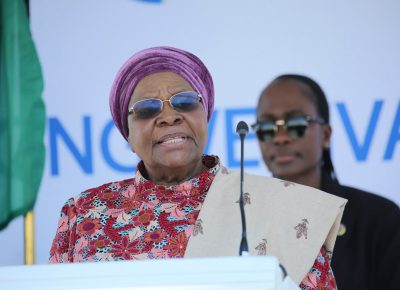
Photo: Namibian President Netumbo Nandi-Ndaitwah (Namibian Presidency)
Namibian President Netumbo Nandi-Ndaitwah has reaffirmed government’s commitment to strengthening Namibia’s fishing industry, describing it as a strategic national asset that must be sustainably managed for the benefit of all citizens.
Speaking during a high-level fishing industry engagement in Walvis Bay, the President said the visit forms part of the 8th administration’s responsibility to oversee the implementation of the Sixth National Development Plan (NDP6), which is aligned with the ruling party’s 2025–2030 election manifesto and the country’s long-term Vision 2030 goals. “It is highly appropriate that we gather here today to engage on one of our key economic enablers,” she said. “The fishing industry remains a priority sector that contributes significantly to employment, income generation, foreign exchange earnings, and food security.”
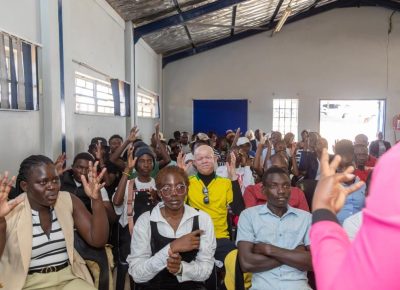
The working visit, she explained, is aimed at creating a platform for open dialogue between government, industry leaders, and workers. By engaging directly with stakeholders, the President said government seeks to gain first-hand insight into the challenges and opportunities facing the sector. “We are here to listen, to understand, and to reflect together on the way forward,” Nandi-Ndaitwah noted, encouraging participants to engage honestly and constructively. She acknowledged that the industry has undergone significant changes over the years, some of which have had a direct impact on jobs and livelihoods. Concerns have also been raised about certain practices within the sector and their implications for sustainability and economic stability.
However, the President stressed that the engagement is not about assigning blame, but rather about finding practical solutions. “We must speak openly about what is working and where improvements are needed,” she said. Nandi-Ndaitwah also highlighted growing concerns around the sustainability of marine resources, warning that the long-term health of fish stocks requires careful management and collective responsibility. Walvis Bay, regarded as one of Namibia’s key economic hubs, provides an ideal setting for such discussions, given its central role in the fishing industry. Concluding her remarks, the President reaffirmed Namibia’s commitment to building a strong, inclusive, and sustainable fishing sector. She urged all stakeholders to use the engagement productively and work together in unity to secure the future of the industry.
By Rudi Bowe