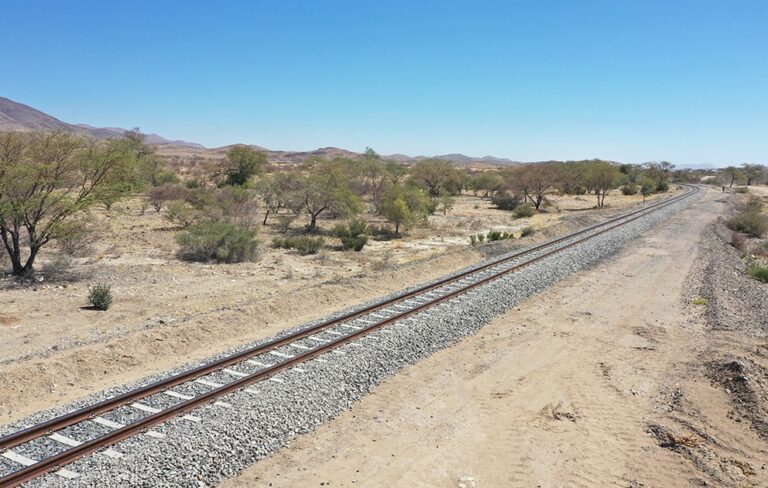
The Port of Walvis Bay could be on the brink of a major freight boom if the proposed US$8 billion Trans-Kalahari Railway moves from feasibility studies to construction.
The ambitious railway project is expected to create a direct heavy-haul rail connection between Botswana’s mineral-producing regions and Namibia’s coast, potentially transforming Walvis Bay into one of the region’s most important gateways for mineral exports and international trade. The proposed railway, estimated at approximately 1 850 kilometres, is now moving towards procurement after completion of the feasibility study. But significant hurdles remain before construction can begin.
Botswana and Namibia still need to finalise the financing model, procurement arrangements, regulatory approvals and appointment of a developer. A public-private partnership (PPP) concession is being considered. Botswana’s Ministry of Transport has said the next steps include interrogating the feasibility study recommendations, agreeing on financing mechanisms and developing a transparent procurement strategy before the project moves into a Request for Proposals process.
For Walvis Bay, the potential economic prize is substantial. The railway could funnel large volumes of Botswana’s minerals and other regional freight towards the port, including copper, coal, iron ore, manganese, fuel, cement and containerised cargo. That could mean more trains, more cargo and increased demand for port handling, logistics, warehousing, trucking and other supporting services along the Walvis Bay corridor. It could also strengthen Namibia’s position as a preferred Atlantic trade route for landlocked countries seeking access to international markets.
The project is therefore not simply a railway connecting two countries. It could reshape freight patterns across Southern Africa and significantly increase the strategic importance of Walvis Bay. Botswana is also exploring connections with other regional trade corridors, including the Lobito and Beira routes, as it seeks to diversify access to international markets. Discussions with the Dangote Group have further highlighted potential opportunities for industrial and construction-sector participation, although no confirmed procurement or supply contracts have been announced. The governments have committed to accelerating the project, but financing remains one of the biggest questions.

At an estimated US$8 billion, the railway will require substantial private-sector and potentially institutional investment, alongside a clear allocation of construction, operational and financial responsibilities.
If the project reaches construction, the port could gain a major new freight artery into the heart of Southern Africa, potentially turning Botswana’s minerals into billions of dollars’ worth of additional cargo moving through Namibia’s Atlantic gateway.
By Rudi Bowe
Source: Railways Africa