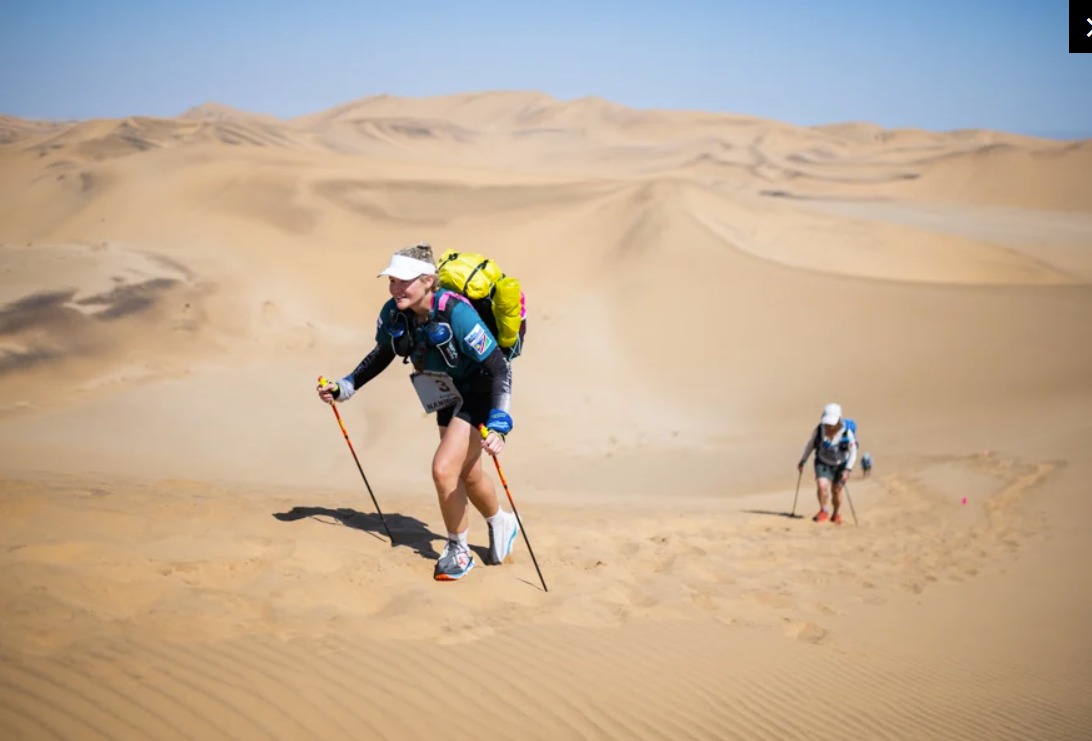
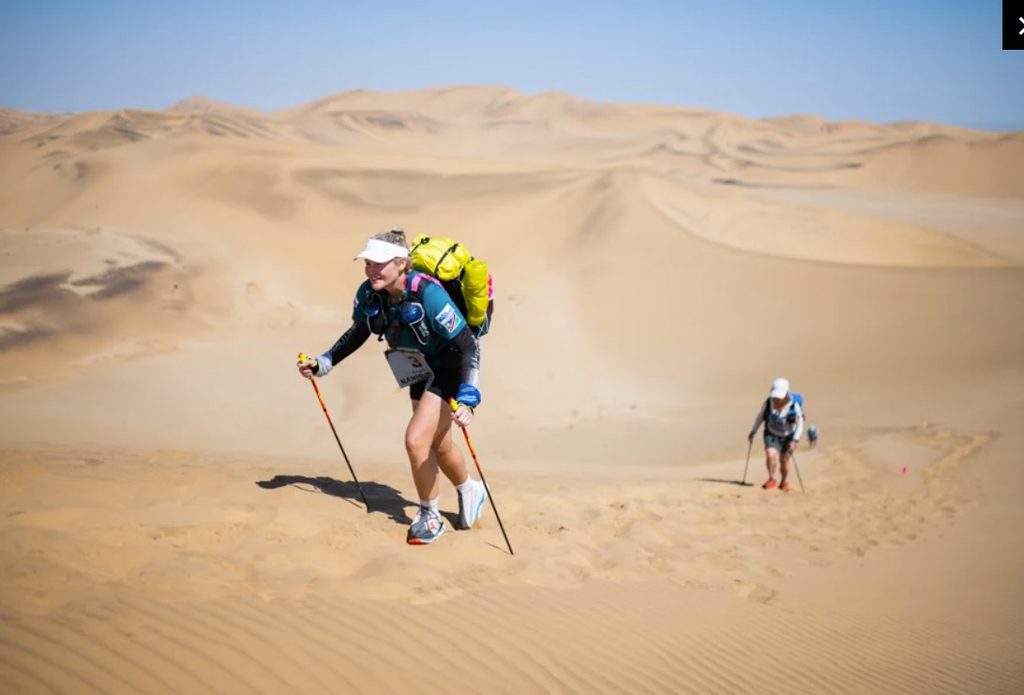
Two Walvis Bay endurance athletes, Elke Slinger and Angela Alchin, recently took on one of the world’s most demanding endurance events, the Namib Race, a gruelling 250-kilometre ultramarathon across Namibia’s iconic desert landscape.
The seven-day, six-stage race attracted 128 competitors from 37 countries, ranging in age from under 20 to 73. Around 30 percent of the field were women, while 65 percent had previous experience, challenging participants to cover more than 240 kilometres through harsh desert conditions before finishing along the Swakopmund coastline.
For Slinger, the race was a deeply personal challenge as she pursued her dream of representing Namibia on home soil. She completed 84.3 kilometres of the planned 250 kilometres before being pulled from the race after falling outside the required cut-off time.
Despite not reaching the finish line, Slinger described the experience as one of the most challenging, emotional and rewarding journeys of her life. “The desert has taught me a lot. It broke my feet, tested my limits, but it never broke my spirit,” she said.
Slinger said the experience challenged her physically and mentally while teaching her valuable lessons about perseverance and personal limits. She encouraged aspiring participants to prepare thoroughly, respect the desert and embrace every difficult moment of the race. Although her campaign ended differently from what she had hoped, Slinger indicated that her journey with the Namib Race may not be over, leaving open the possibility of returning to the desert in the future.
For Alchin, the Namib Race marked her fourth participation in the demanding 4 Deserts series. She said the event is about so much more than simply running or hiking through the desert and presents significant financial challenges for local athletes, particularly when compared with international competitors who may have greater access to sponsorship.
“This race caters for international competitors; it’s too expensive for locals unless you get a sponsor,” Alchin said. She plans to compete in one more race next year in an effort to become part of the 4 Deserts Club, after which she may return to the event in a volunteer capacity. “This is my fourth race.

I will do one more next year to become part of the 4 Deserts Club and will probably go back to being a volunteer,” she said. Alchin also highlighted the physical toll of the races, saying the extreme endurance events are “very hard on the body”. “You also give up almost every little luxury. Even something as simple as cold water isn’t available.
You have to learn to drink warm water while moving through temperatures of around 40°C. No showers for 7 days. Sleep deprivation is also a thing as you share a tent with 6 other people and most days you’re too sore to sleep. It really is an incredibly difficult race to complete, and that challenge goes far beyond covering the 250km” Achin concluded.
There is an incredible amount of preparation involved, from compulsory gear and testing your equipment, to figuring out your fuelling and salt intake strategy, learning how to manage blisters, and getting your body accustomed to carrying a pack of around 10kg for days on end.
The experiences of Slinger and Alchin highlight both the physical and financial challenges faced by athletes who take on extreme endurance races, while also demonstrating the determination and resilience required to compete in one of the world’s toughest desert environments.
For both athletes, the Namib Race has been more than a test of running ability. It has been a journey of endurance, self-discovery and determination against one of Namibia’s most unforgiving yet spectacular landscapes.
By Rudi Bowe