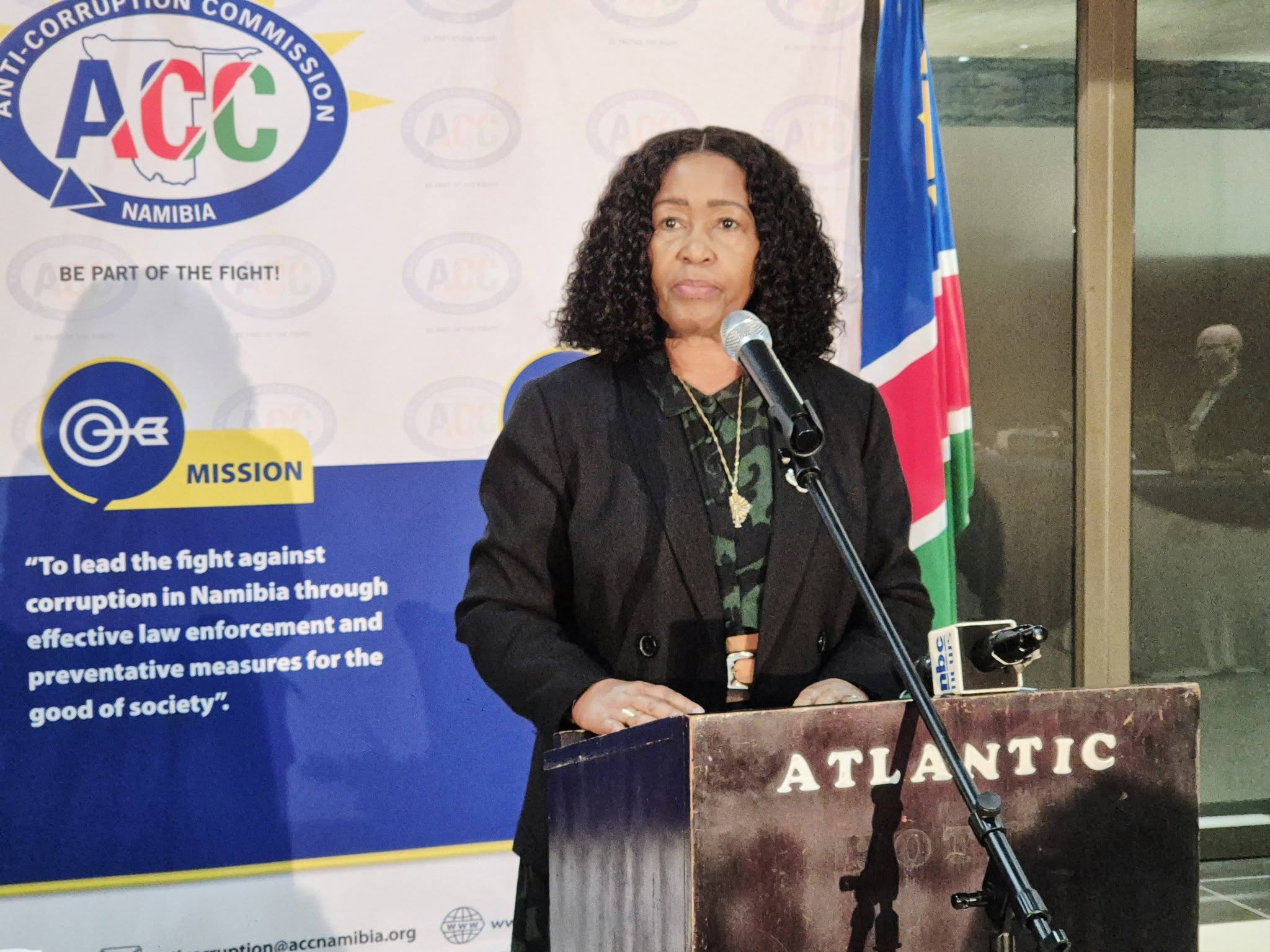
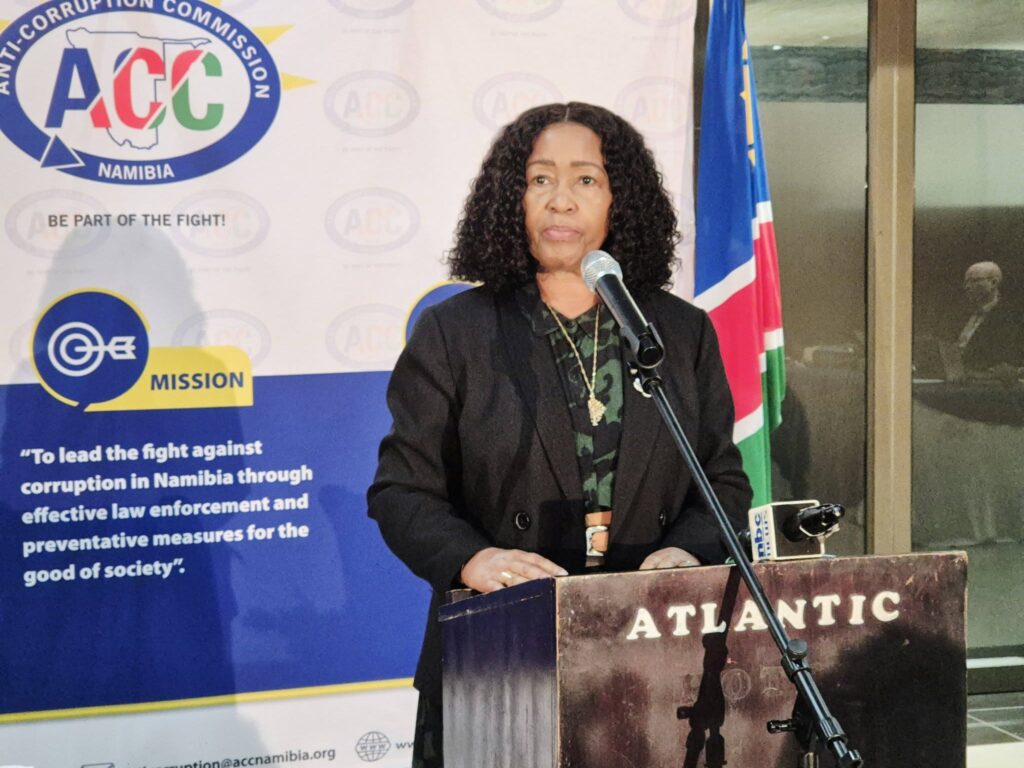
Fisheries and Marine Resources Minister Inge Zaamwani has pledged stronger controls, greater transparency and zero tolerance for corruption in the management of Namibia’s fisheries resources, saying fishing rights and quotas must never be influenced by personal interests or favouritism.
Speaking at the opening of a five-day Corruption Risk Assessment Workshop hosted by the Anti-Corruption Commission (ACC) in Walvis Bay, Zaamwani said Namibia’s marine resources are a national asset that must be managed responsibly for the benefit of current and future generations.
She thanked the Anti-Corruption Commission (ACC) for partnering with the ministry in strengthening integrity, accountability and corruption prevention within the fisheries sector.
Zaamwani stressed that decisions around fishing rights and quota allocations must be guided by legality, fairness, transparency and accountability.
She said public officials entrusted with managing the sector have a responsibility to act with honesty, impartiality and professionalism, regardless of whether they are being scrutinised.
“Integrity means doing the right thing even when no one is watching,” she said, emphasising the importance of avoiding conflicts of interest and applying policies consistently.
The minister warned that corruption threatens more than government revenue, saying it can weaken institutions, discourage investment and undermine sustainable management of Namibia’s marine resources.
She said the focus must therefore be on preventing corruption before it occurs by strengthening systems, internal controls and transparent procedures.
Zaamwani described the five-day risk assessment as an opportunity to strengthen the ministry rather than an exercise in assigning blame.
The assessment will seek to identify vulnerabilities, reduce unnecessary discretion in decision-making and improve accountability across fisheries management systems.

She committed the ministry to strengthening quota allocation processes, improving record management, enhancing decision-making and reinforcing internal controls.
Zaamwani also pointed to the Fisheries Transparency Initiative (FiTI) as one of the international benchmarks Namibia is considering to strengthen transparency and align fisheries governance with global standards.
She said greater transparency and inclusive decision-making could help restore and build public confidence, attract investment and ensure that Namibia’s fisheries resources remain sustainable over the long term.
However, the minister stressed that government cannot achieve these objectives alone.
She called for cooperation among government institutions, oversight bodies, the private sector, civil society and ordinary citizens to build a fisheries sector founded on integrity and accountability.
Zaamwani said the success of the risk assessment would ultimately depend on participants being willing to engage honestly, challenge existing practices and develop practical recommendations that can be implemented and monitored.
She officially declared the workshop open, urging participants to use the exercise to strengthen institutional resilience and safeguard one of Namibia’s most valuable national resources.
The minister’s message was clear: stronger institutions, ethical leadership and collective responsibility are essential if Namibia’s fisheries sector is to remain sustainable, trusted and beneficial to future generations.
By Rudi Bowe