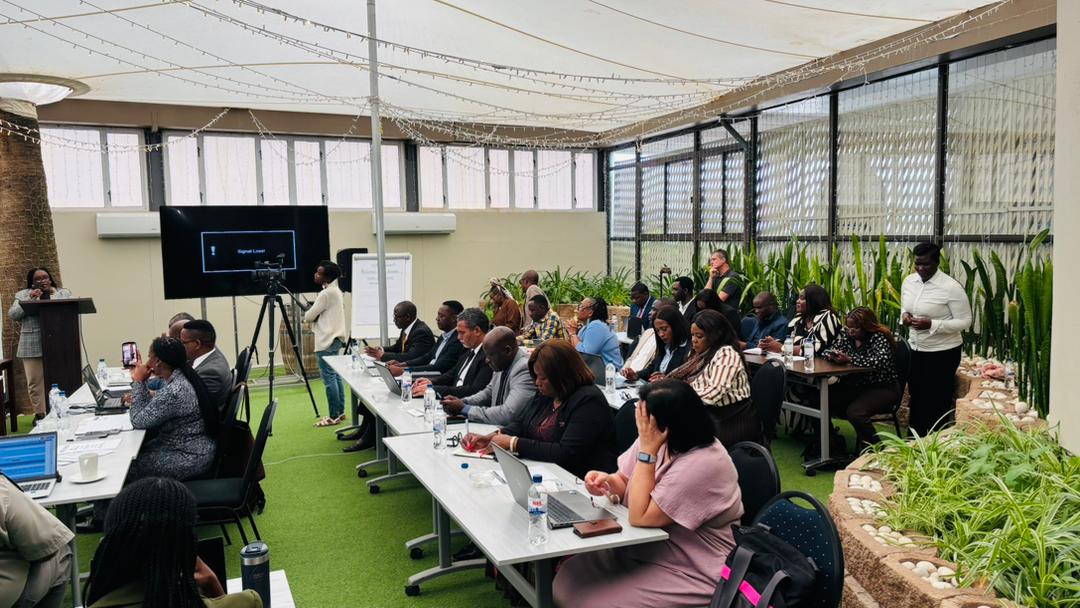
Leaders and stakeholders from across the Erongo Region convened this week in Swakopmund for a high-level regional sensitisation on the National Strategy for the Development of Statistics (NSDS). The event, held over 16–17 February, brought together government officials, local authorities, private sector representatives, and civil society to strengthen Namibia’s data systems and promote evidence-based decision-making.
Nathalia /Goagoses, the Governor of Erongo Region, in her keynote address, emphasised the importance of accurate and timely statistics in guiding development policies.
“Statistics are the lens through which we can view our society’s progress toward national goals, including Vision 2030, National Development Plans, and the Sustainable Development Goals,” /Goagoses said. She highlighted that the NSDS is not only a tool for the Namibia Statistics Agency but a strategy for all Namibians, calling on every sector to support coordinated data collection and analysis.
Suamma Kautondokwa, Mayor of Swakopmund, welcomed participants and underscored the vital role of reliable information in local governance. “Statistics help us move from assumptions to evidence and from intentions to measurable results,” she said. As frontline service providers, local authorities generate administrative data daily, placing them in a critical position to feed into Namibia’s National Statistical System. Kautondokwa praised the Namibia Statistics Agency for promoting collaboration and ensuring that local-level data informs regional and national planning.
The discussions continued on 17 February with a technical staff workshop, led by Sylvester Mubila, Deputy Director for Development Planning at the Erongo Regional Council. He highlighted the growing demand for accurate data in a region characterised by mining, fisheries, tourism, and port activities. “Without quality data, it becomes difficult to identify who is being left behind, where gaps exist, and how to respond strategically and inclusively,” Mr Mubila said.
The workshop provided an opportunity for technical staff to strengthen their skills in data production, processing, and reporting to better support planning and service delivery across the region.

Throughout the two-day engagement, participants acknowledged that statistics are more than numbers, they are critical tools for sustainable development, social progress, and economic growth.
The NSDS provides the framework to ensure data is comprehensive, reliable, and inclusive, enabling policymakers and community leaders alike to make informed decisions that benefit all Namibians.
As Erongo Region continues to grow and diversify, these initiatives signal a clear commitment to a data-driven future, where development is measurable, decisions are evidence-based, and no citizen is left behind.
By Sharlien Tjambari