Photo contributed
“Jetty Not Considered a Common Suicide Hotspot”
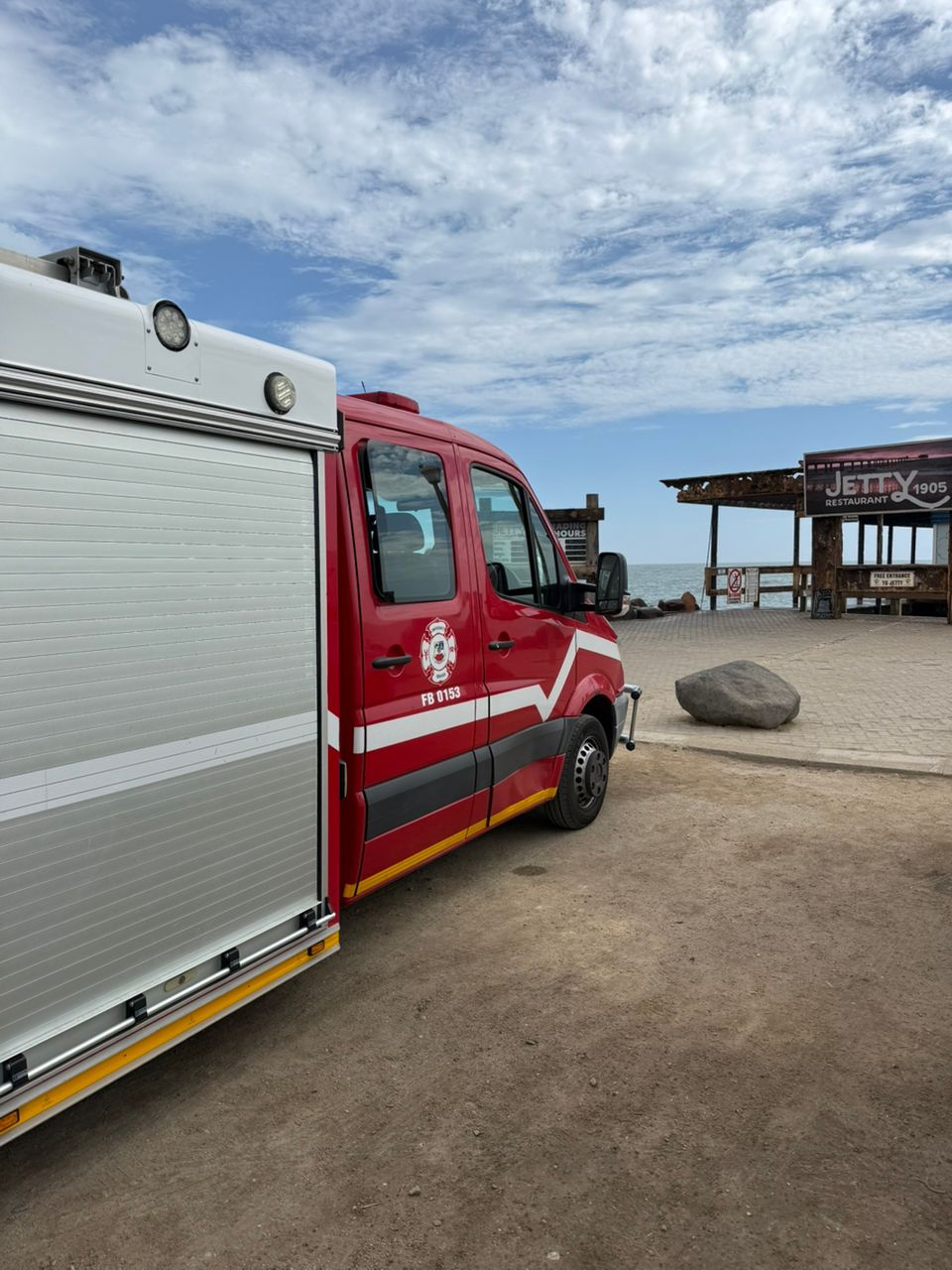
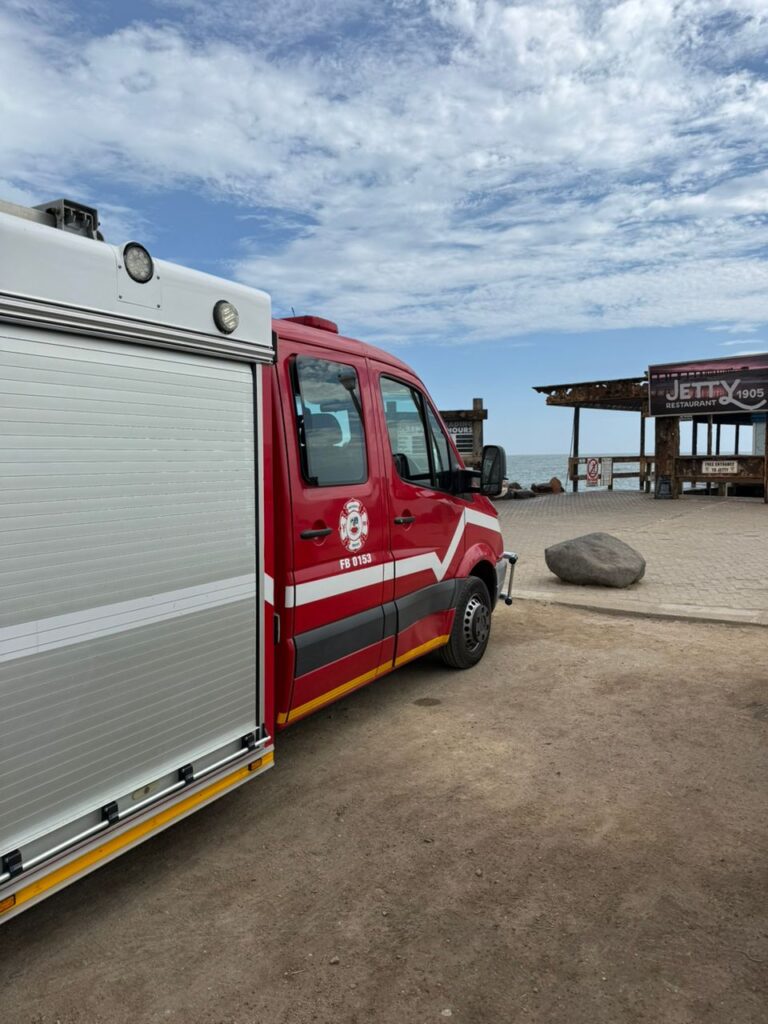
Following recent and past suicides and attempted suicides at the Swakopmund Jetty, the general safety of the historical landmark has again come under public discussion, prompting Namib Times to engage several stakeholders on the matter.
According to local paramedic and mental health advocate Mr Brendon Scott, the municipality carries primary responsibility for the maintenance and general safety oversight of the Jetty. Scott noted that the Lighthouse Group, owned by Mr Quinton Liebenberg, has also contributed toward repairs and upkeep associated with the Jetty and surrounding facilities used by locals and tourists. Scott further stated that, in his experience, the Jetty is not commonly regarded as a location where suicides or suicide attempts frequently occur.
According to him, incidents linked to the Jetty often receive heightened public attention because of the landmark’s prominence. “Most drownings linked to suicide involve individuals walking into the ocean rather than jumping from the Jetty itself. Because the Jetty is such a well-known landmark, incidents there naturally receive more public and media attention,” Scott said. He further indicated that several drowning incidents have historically occurred in the ocean area between the Jetty and the Mole, as well as near the old Klip Jetty area.
To improve general safety at the Jetty, Scott suggested the installation of life preservers connected to alarm systems that could alert emergency responders if removed. He also proposed the installation of CCTV cameras monitored on a 24-hour basis.

Another local emergency medical service provider, who spoke to Namib Times on condition of anonymity, said she could recall approximately four confirmed suicide-related incidents at the Jetty over the past three years. She said this suggests the location may not be regarded as a frequent “suicide hotspot.” She further stated that while the Swakopmund Municipality is responsible for the Jetty structure itself, she could not confirm which entity is responsible for specific safety interventions in the area.
According to the source, security personnel do patrol the vicinity, while the Lighthouse Group, which operates the Jetty Restaurant, has certain lifesaving equipment available on its deck, although accessibility may be limited outside operating hours. Among the additional safety measures she suggested were safety catch nets below sections of the Jetty, emergency panic buttons, and “man overboard” ladders to assist in water rescue situations. Addressing the broader issue of suicide and mental health, she remarked that mental health challenges remain a growing concern in coastal communities. “Until the stigma surrounding mental health is reduced and more support systems become available, these incidents may continue to affect communities,” she said. She added that many suicide-related incidents occurring outside prominent public spaces often receive limited public attention, which can contribute to perceptions surrounding the Jetty.
The source further proposed that local authorities and emergency services explore strengthening coordinated drowning-response and water-safety systems, potentially including the re-establishment or strengthening of NSRI-related support structures in the area. In conclusion, she said cooperation between the Swakopmund Fire Department, Namport, municipalities, and emergency services would be important in developing a sustainable emergency response framework. Namib Times contacted the Swakopmund Municipality for comment prior to publication. At the time of going to print, no response had been received.
By Marshallino Beukes