Namibia needs to rethink how it finances its development so that the country’s natural resources, renewable energy and new industries create real opportunities for its people.
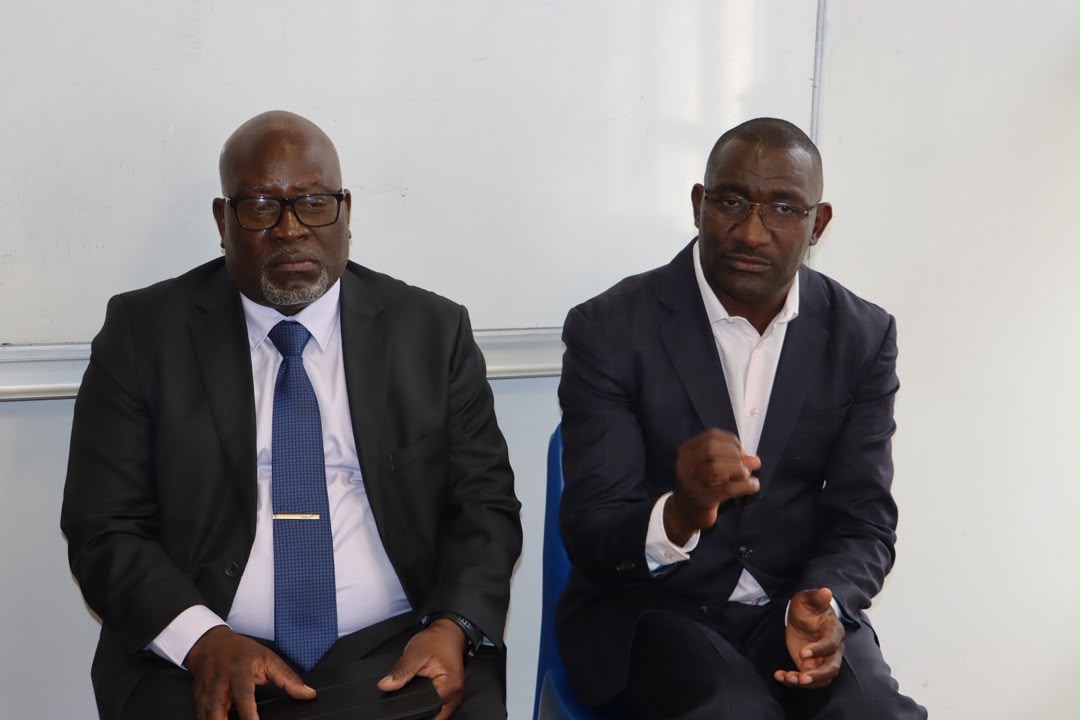
This was the message from Minister of Industries, Mines and Energy, Modestus Amutse, when he officially opened the Second International Conference on Finance and Sustainable Business at the Namibia University of Science and Technology (NUST) on Wednesday.
The two-day conference is being held under the theme, “Rethinking Green Finance Innovations for Sustainable Business Models.” Amutse said sustainable development cannot only be about environmentally friendly projects. It must also create jobs, increase local ownership, improve access to finance and basic services, and build Namibia’s productive capacity. “A sustainable business model for Namibia must be commercially viable, environmentally responsible and socially inclusive,” he said. He pointed out that Namibia has just over three million people spread across a very large country, with an average population density of only 3.7 people per square kilometre. At the same time, income inequality remains high, while the 2023 Census showed that only 59.5% of households had access to electricity. According to Amutse, these realities show the kind of financing challenges Namibia needs to address.
The minister said the Sixth National Development Plan (NDP6) provides clear targets for Namibia as the country works towards Vision 2030. Among the targets are economic growth of at least 7%, an employment rate of 75% and an increase in manufacturing’s contribution to GDP from 10.6% to 18%. The plan also aims to increase processed mineral exports from 46.6% to 57%, increase installed electricity capacity from 734 MW to 1,153 MW, and raise electricity access from about 59% to 70%. Amutse said all these targets come down to one important question: Who will finance them? “Who will finance the power station, transmission line, processing plant, technical college, emerging enterprise and household connection?” he asked. He said Government alone cannot finance all of Namibia’s development needs, while private investors are unlikely to take on risks they cannot properly understand or manage. This is where green finance can play an important role, he said. Namibia has some important natural advantages, including excellent solar resources, strong coastal wind resources, uranium and other critical minerals.
The country also has a strategic Atlantic location and a developing petroleum industry following oil discoveries in the Orange Basin since 2022. Amutse said these resources create opportunities, but strong institutions, financing and local skills will determine whether Namibia benefits fully from them. He said Namibia’s green economy must therefore be about more than protecting the environment. Renewable electricity should support mines, factories, farms and small businesses, while green hydrogen could support new industries such as green iron and fertiliser production. He pointed to the Cleanergy Hydrogen Dune facility, which includes a 5 MW solar plant, a 5 MW electrolyser and battery storage. At the other end of the scale is the proposed Hyphen project, which could involve more than US$10 billion in capital investment. Amutse said different projects require different forms of financing.Smaller and new technologies may need grants and patient capital, while large infrastructure projects may require long-term finance, guarantees and other support.
The minister also addressed the debate around Namibia’s emerging oil industry and the country’s energy transition. He said petroleum development and renewable energy should not automatically be seen as opposites. Namibia is still working to increase electricity access, create jobs, reduce poverty and build industries. “The energy transition cannot become a choice between development and decarbonisation,” he said. Amutse said that if Namibia’s petroleum resources become commercially viable, the country must use the opportunity to build lasting assets. These could include skills, infrastructure, reliable electricity, water security, renewable energy and a more diversified economy. “If oil gives us only exports and public revenue, we will have developed a field,” he said. “If it builds Namibian capability and widens economic opportunity, then the resource will have helped to develop Namibia.” Finance must reach ordinary people.
Amutse also highlighted the difficulty faced by people who do not qualify for traditional loans. He referred to the Solar Revolving Fund in his ministry, which provides subsidised loans for solar technologies. However, such financing can be difficult to access for people without formal employment, a bank account or a credit history. He said this does not mean the fund has failed but rather shows that Namibia’s financing system still has gaps. “A just transition cannot end where creditworthiness ends,” he said. He called for more financing options for poorer households, unemployed young people and informal businesses. These could include targeted subsidies, pay-as-you-go systems, guarantees for underserved borrowers and financing models for mini-grids in rural areas. The minister said Namibia’s critical minerals also present an opportunity to create more value inside the country. He said the focus should not only be on what minerals Namibia can export, but on how those minerals can create jobs, businesses, skills and infrastructure locally.
He referred to recent engagements in China, saying discussions around lithium beneficiation showed that processing minerals requires more than just a mine. It also requires electricity, water, process heat, laboratories, transport and specialised skills. “Mining, energy, water, industrial policy and finance must meet before the investment decision – not after a plant asks for a connection the system was never prepared to supply,” he said. Amutse said Namibia should support local suppliers, technical training, industrial clusters and shared infrastructure where there is a strong economic case for processing minerals locally. Amutse challenged NUST and the conference participants to develop practical solutions that can move from research papers to Government policy and eventually to projects that can be financed. He identified four key questions for researchers and the finance sector.
These include how Namibia can lower the cost of capital, how finance can reach people and businesses without collateral or conventional credit histories, how smaller projects can be combined into larger investment opportunities, and how sustainability can be measured. He said sustainability should not only be measured by emissions avoided, but also by jobs created, skills developed, local procurement, ownership, electricity access and the country’s ability to withstand future challenges. “We must move from discussion to design, from design to finance, and from finance to measurable development outcomes,” Amutse said. He officially declared the Second International Conference on Finance and Sustainable Business open.
By Eileen van der Schyff