The Erongo Region has launched its first Education Infrastructure Investment Conference in Swakopmund, calling for stronger partnerships between government, the private sector, investors and development partners to address growing pressure on education infrastructure.
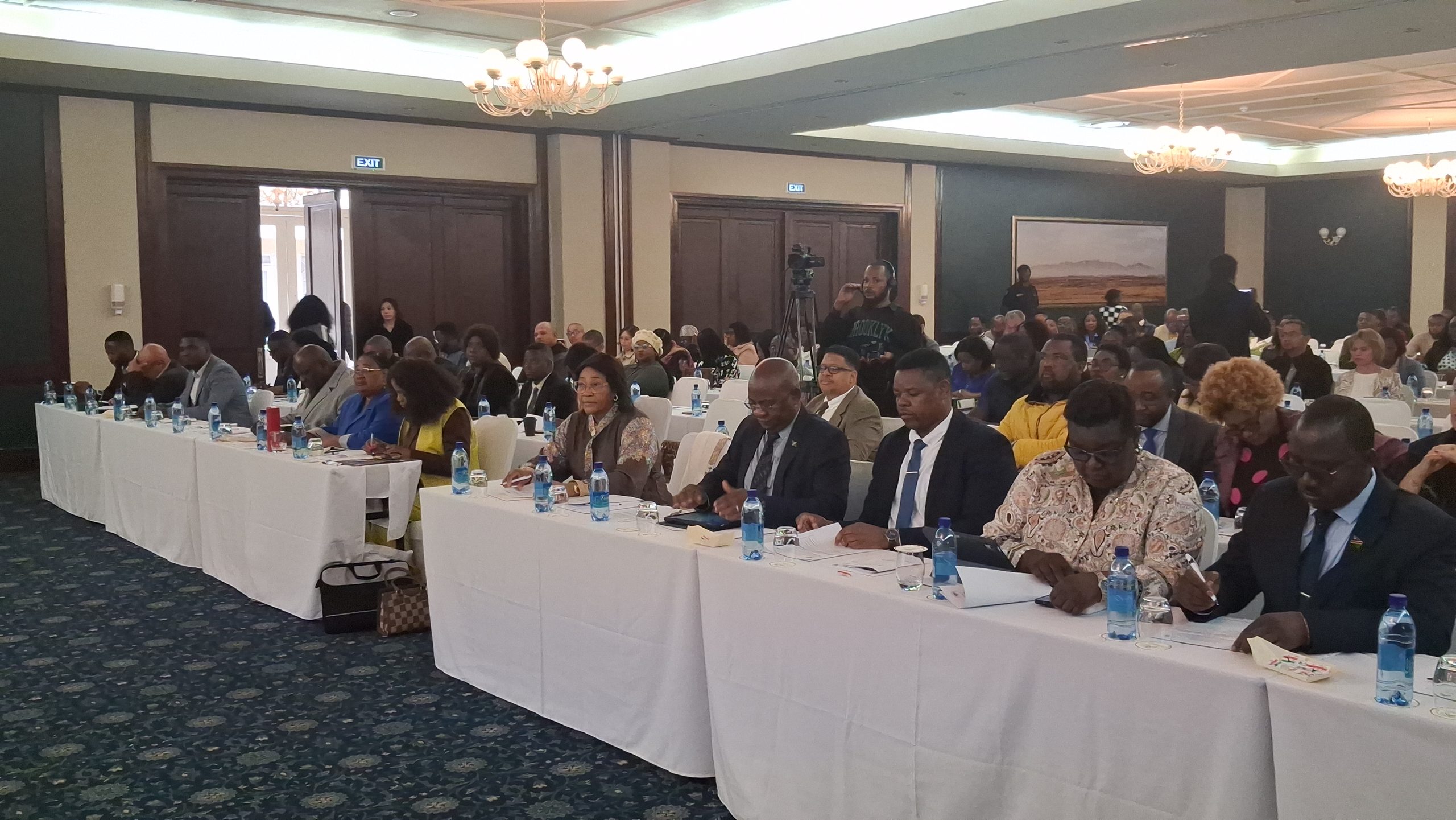
The conference, held on 29 September at the Swakopmund Hotel and Entertainment Centre under the theme “Mobilizing Partnerships and Investment for Sustainable Education Infrastructure Development in the Erongo Region”, brought together education officials, regional leaders, businesses, investors, financial institutions and other stakeholders. Welcoming delegates, Walvis Bay Urban Constituency Councillor Albertina Nkosi said the region could not address its education infrastructure needs through government efforts alone. “As the Erongo Region continues to grow and develop, the demand placed on our education infrastructure grows with it. Addressing these needs cannot rest on Government alone,” Nkosi said.
She said the conference was intended to create a platform where different sectors could identify practical solutions and contribute resources, expertise and investment towards education infrastructure. According to the Acting Director of Education in Erongo, Helena Asino, the region currently has 99 schools, comprising 56 government and 43 private schools, serving 60,988 learners and supported by 2 137 teachers, according to the regional education infrastructure presentation. Chief Regional Officer Dr Mupenzeni Ntelamo said the conference was not simply a call for additional government funding. “The purpose of this conference is to place our identified education infrastructure needs before potential investors, the private sector, financial institutions and development partners, and to explore practical ways in which we can collectively respond to those needs,” Ntelamo said. He said the region had identified approximately N$230 million in education infrastructure investment opportunities.
The opportunities cover construction of new schools and classrooms, expansion and rehabilitation of existing facilities, learner hostels, teacher accommodation, laboratories, ICT infrastructure, renewable energy, water and sanitation facilities, kitchens and sports infrastructure. Ntelamo said the region was particularly interested in sustainable financing and delivery models, including public-private partnerships. The conference’s infrastructure presentation by the Deputy Director for Programmes and Quality Assurance, Natalia Guriras shows that the demand for education infrastructure is expected to continue rising, with the regional learner population projected to reach 67 239 by 2028.

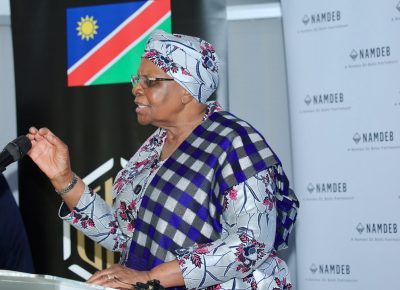
The Governor of Erongo, Dr Natalia /Goagoses, said the infrastructure challenge had to be addressed alongside the broader development of the region. She pointed to Erongo’s economic expansion, including emerging oil and gas activities and other industries, saying the region would require properly trained young people to participate meaningfully in its future economy. She also stressed that infrastructure development should be comprehensive. “If we only talk about classrooms, so what? How will this conducive environment be created if classrooms are not equipped with the necessary equipment?” the Governor asked.
She called for planning that considers classrooms together with teachers, equipment, electricity, water and other requirements. The conference also placed emphasis on converting discussions into concrete commitments. Ntelamo said the intention was for the conference to become the beginning of a structured investment dialogue that would move towards project development, expressions of interest, partnerships and measurable investment outcomes. “From needs, to opportunities. From opportunities, to partnerships. From partnerships, to investment. And from investment, to infrastructure that creates lasting value,” he said.
Nkosi said every contribution could make a difference to learners and communities. “Behind every classroom is a learner with a dream. Behind every school is a community with hopes for a better future,” she said. The regional education directorate has identified investment priorities that include capacity expansion, sanitation and water, science, ICT and libraries, hostels and accommodation, rehabilitation and safety, and food and learner welfare.
By Sharlien Tjambari