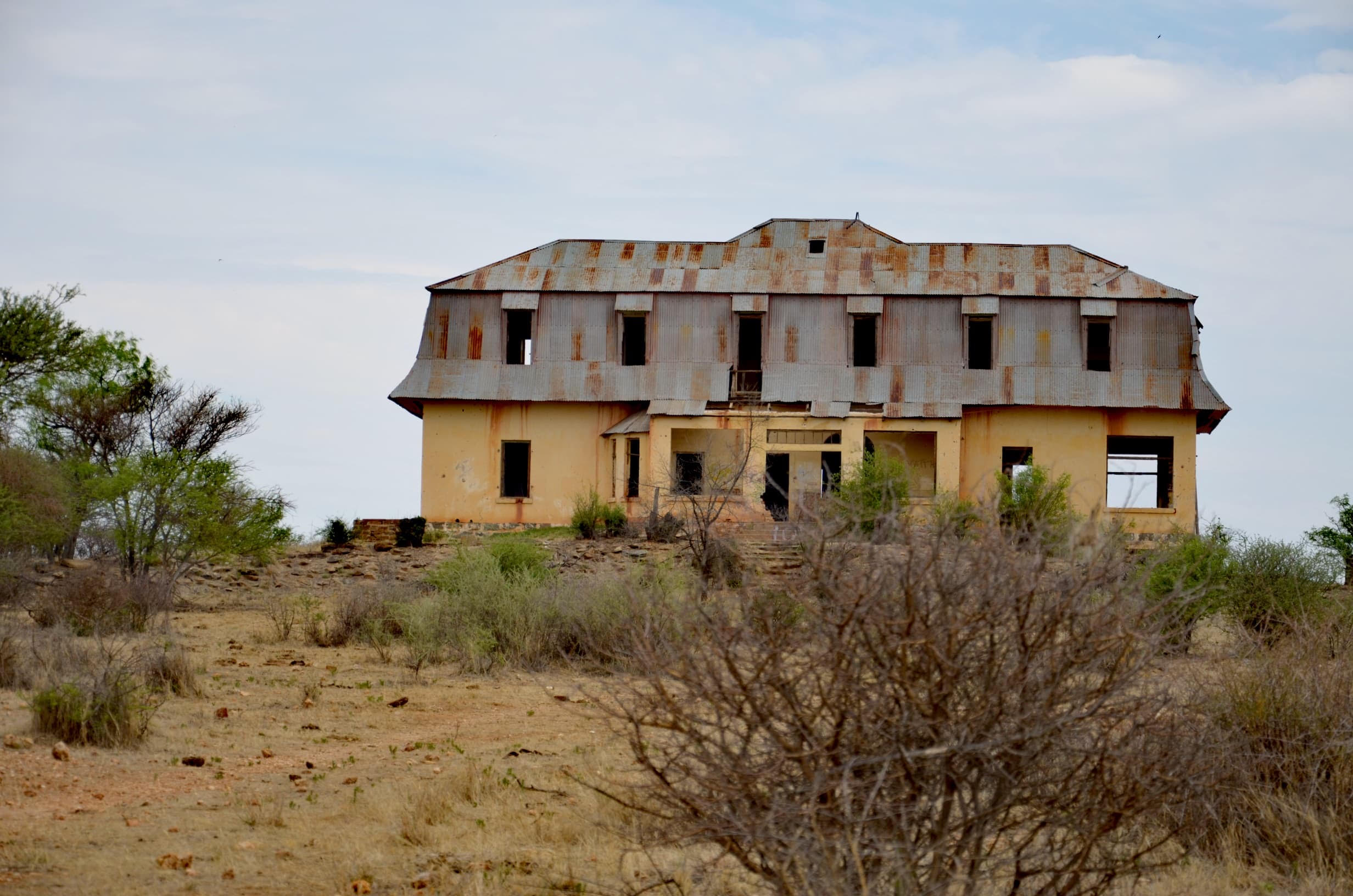
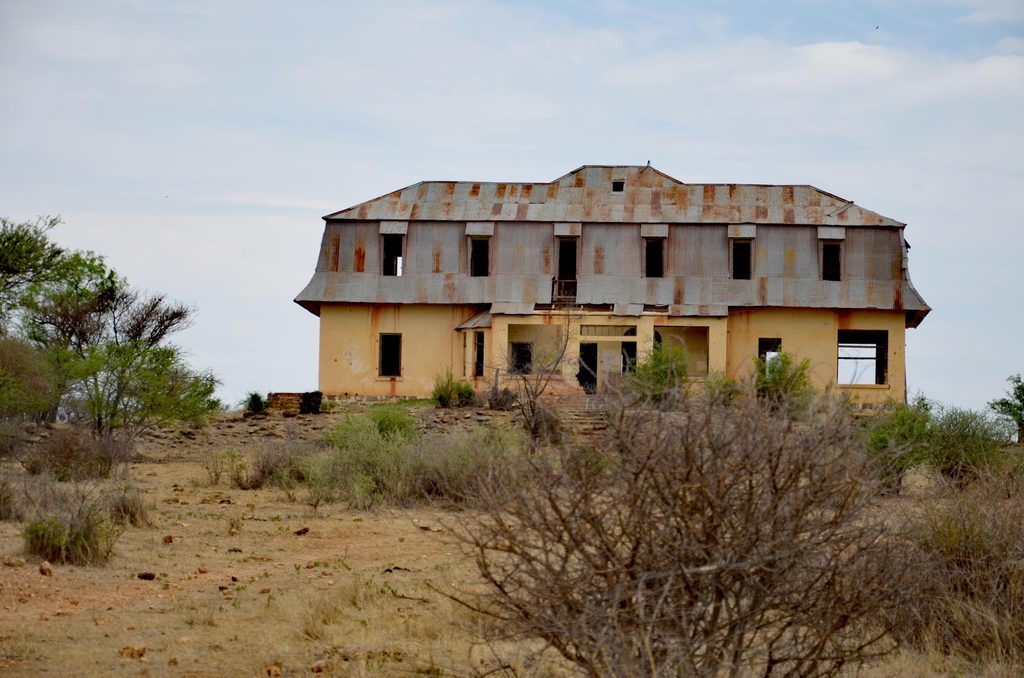
Photo taken by Angelique Adventure Girl Prinsloo
For Swakopmund-based lifestyle influencer and adventure enthusiast Angelique Adventure Girl Prinsloo, sometimes the most interesting discoveries are made when you least expect them.
A recent trip along the C28 gravel road between the coast and Windhoek turned into an unexpected history hunt when Angelique spotted an old, abandoned double-storey house standing alone on a hill. Intrigued by its appearance, she stopped to take photographs, unaware that the building had a history dating back more than a century. What started as an unplanned stop soon became a journey into the past, as Angelique set out to uncover the story behind what many people know as Namibia’s Ghost House. “I saw the house from far away and I stopped, because I love adventure. I did not plan to go there specifically — the house itself made me stop to take photos,” she said.
Having never seen the building before, its appearance immediately caught her attention. Standing isolated on the hill, the house made a lasting impression. “I was amazed. It stands alone on a hill, and you can see it from far away. It felt lonely, powerful and unforgettable. What caught me most was how big it is — a double-storey house, standing ruined and abandoned in the middle of nowhere,” Angelique recalled. Curiosity soon got the better of her, and she decided to research the building after her visit. She discovered that the property, known as Liebig Haus, was built around 1911/1912 as the director’s residence for the Liebig’s Extract of Meat Company at Neu-Heusis.
According to the historical information she uncovered, most of the building components were prefabricated in Germany before being shipped to Namibia. The residence was considered pure luxury for its time, reportedly being among the first farmhouses in the country to have its own electricity, generated by an on-site generator, as well as flush toilets. Neu-Heusis served as the company’s headquarters for cattle breeding, with the aim of producing meat extract for the international market. For Angelique, the discovery made the old building even more fascinating. “When I first saw it, I only knew it looked mysterious and historic. Afterwards I learned about its history,” she explained. She later shared her photographs and findings on social media, where the post quickly attracted attention.

Angelique believes the response was largely because so many people have seen the building while travelling along the road but have never known its story. “I shared it because most people just drive past it without knowing its story. That mystery is what drew me to it, and I wanted to share its story before it is forgotten,” she said. The post also brought forward a familiar name, with several people referring to the building as the Ghost House, a nickname used by many in Windhoek because of its spooky, abandoned appearance. Angelique has adopted the name herself, although she is quick to point out that she experienced nothing unusual during her visit. She did not enter the property or approach the owner, choosing instead to admire the building and take photographs from the road and gate. Respecting private property is something she considers important when exploring Namibia’s lesser-known places.
As Angelique Adventure Girl Prinsloo, exploring and documenting Namibia’s hidden stories is something she does regularly. She enjoys discovering places, taking photographs and researching the history behind landmarks that people often drive past without a second thought. For residents of Swakopmund, Walvis Bay and the wider Erongo region, her latest discovery is particularly interesting. The C28 is a familiar route for many coastal residents travelling to and from Windhoek, making Liebig Haus a landmark that many will recognise. Yet, behind its lonely and somewhat mysterious appearance lies a story of Namibia’s early commercial history and a residence that once represented considerable luxury.
Angelique plans to continue exploring and documenting more of Namibia’s historical landmarks, particularly those with stories that might otherwise be forgotten. “I want to continue exploring and documenting more of Namibia’s historical landmarks, especially places with interesting stories that might otherwise be forgotten,” she said. For now, her unexpected stop along the C28 has given a familiar landmark a new lease on life, reminding travellers that sometimes the most interesting stories are hiding in the places we have passed a hundred times without knowing their history.
By Eileen van der Schyff