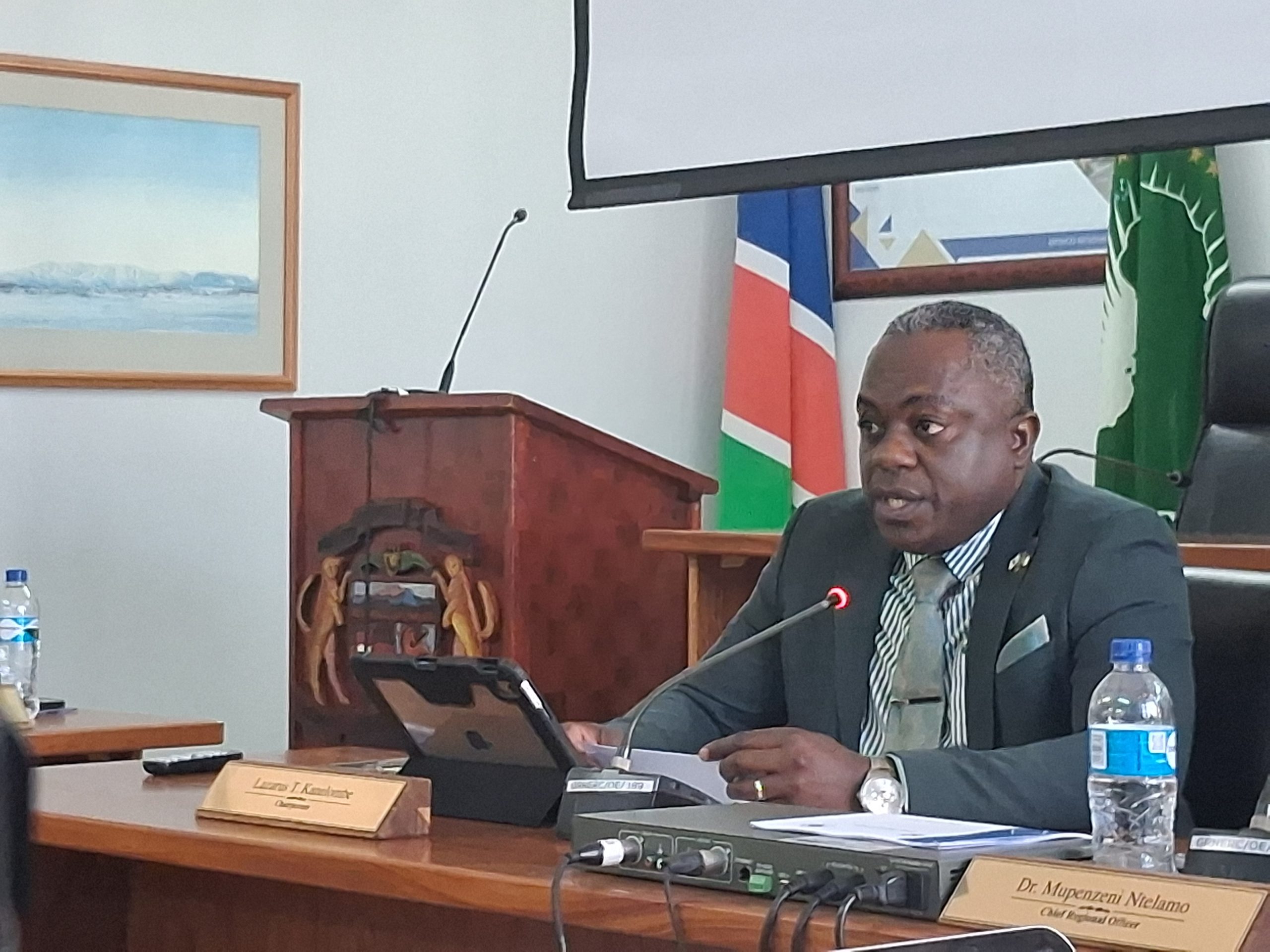
Unemployment, poverty, infrastructure backlogs and unequal access to economic opportunities remain among the major challenges facing the Erongo Region, Erongo Regional Council Chairperson Lazarus Kanelombe has said.
Kanelombe made the remarks on Monday, 9 November, during the Council’s fourth Ordinary Regional Council Meeting of 2026, held at the Erongo Regional Council Chambers. Delivering his official announcement, Kanelombe highlighted developments recorded during September and October, while stressing the need for stronger coordination, accountability and improved service delivery to address the region’s challenges. He noted that although Erongo continues to play an important role in Namibia’s mining, logistics, tourism, trade and industrial sectors, economic opportunities must also reach rural communities and settlements beyond the region’s established urban centres.
On infrastructure development, Kanelombe welcomed the rehabilitation of the Karibib–Usakos Road, which reportedly created 593 employment opportunities during construction. He also identified the Usakos–Arandis road section and Khan River Bridge as priorities requiring attention. Kanelombe further highlighted concerns raised by communities affected by mining developments, particularly in Katorab, Okatjio and the Ondundu area. Issues included proposed relocation, land rights, compensation, local procurement and community participation in the benefits of mining activities.
He emphasised that investment must go hand in hand with meaningful consultation and respect for the rights and interests of affected communities. Education infrastructure was another key area highlighted, with the region’s First Education Infrastructure Investment Conference identifying approximately N$230 million in investment opportunities for classrooms, hostels, teacher accommodation, laboratories and other learning facilities. Kanelombe also pointed to skills development initiatives, including training provided to 60 beneficiaries in Walvis Bay Urban and financial literacy training that reached 265 participants in Henties Bay, Uis and Okombahe.

He stressed that training programmes must increasingly translate into actual employment and business opportunities. Addressing the Council, Kanelombe called on councillors and management to move beyond identifying challenges and ensure that decisions and resolutions are implemented. He said the success of the institution would ultimately be measured by how its decisions improve the lives of the people it serves. “Our task is to ensure that no constituency is overlooked, no community is excluded from the development agenda, and the resources entrusted to this institution are applied in the interests of the public,” he said.
By Sharlien Tjambari