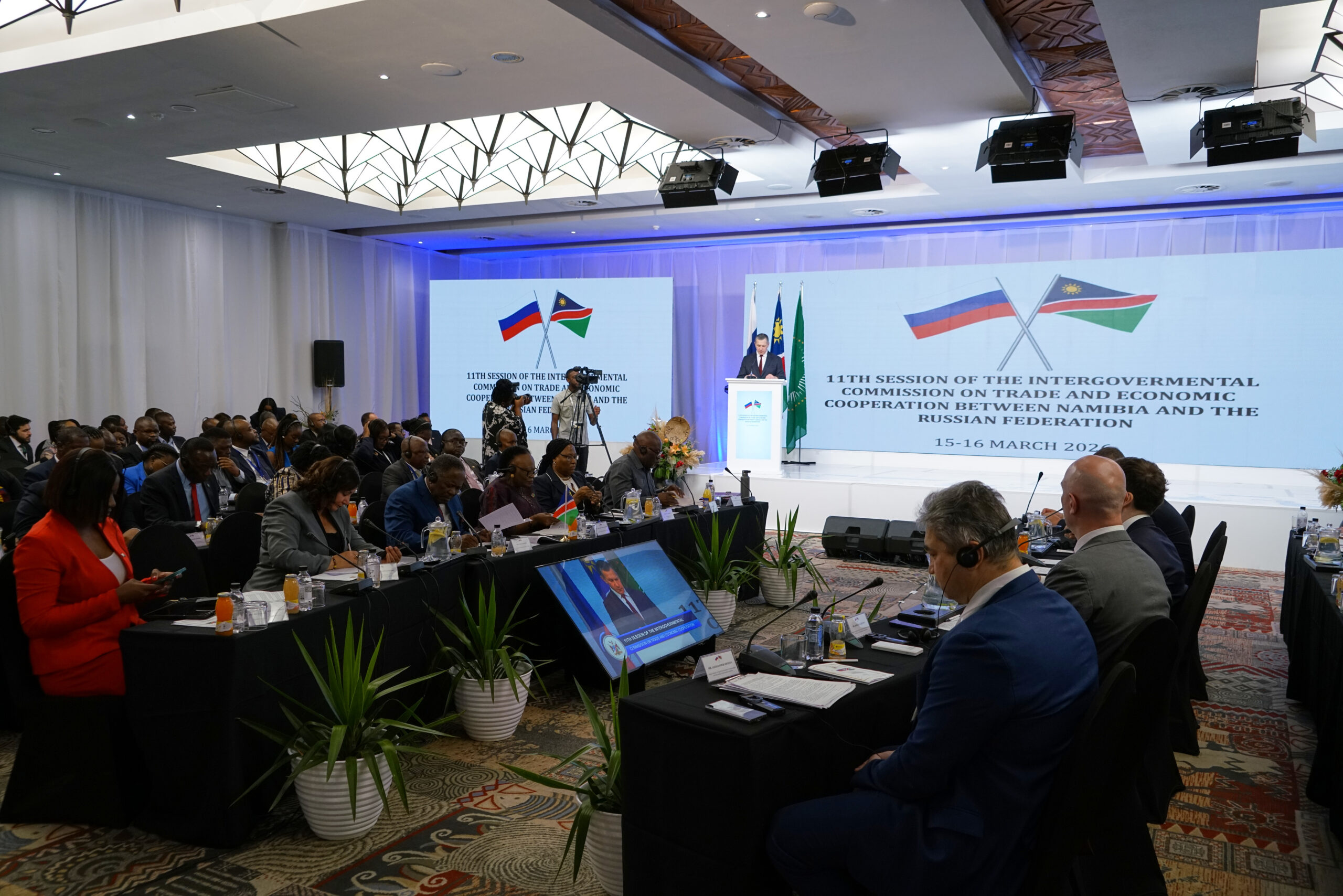
Namibia and Russia have reaffirmed their commitment to deepening bilateral cooperation, with a strong focus on uranium development, energy collaboration, and long-term economic growth, during the 11th session of the Russian Namibian Intergovernmental Commission and a business forum held in Windhoek.
The high-level meeting was co-chaired by Yury Trutnev, Deputy Prime Minister of the Russian Federation, and Selma Ashipala-Musavyi.
Discussions centred on expanding cooperation in uranium mining, subsoil use, and the peaceful application of nuclear energy. A key outcome of the engagements was Namibia’s renewed interest in long-term collaboration with Rosatom. The partnership aims to support localisation of production, boost industrial capacity, and create sustainable employment opportunities for Namibians.
Speaking during the session, Trutnev highlighted the historical ties between the two countries, noting Russia’s support for Namibia during its liberation struggle. He added that the latest engagements marked a significant step toward translating political trust into practical projects across mining, energy, and industrial sectors. Representatives from the Russian delegation presented plans for advancing uranium development through projects led by Headspring Investments, in collaboration with Rosatom-linked entities. The proposed programme includes expanded geological exploration, phased increases in uranium output over more than 25 years, and the establishment of local production facilities.

According to project representatives, the initiative could position Namibia to further strengthen its status as a global leader in uranium mining, while contributing to the development of low-carbon energy solutions in the region. Namibia’s leadership has also expressed strong support for the growing partnership. President Netumbo Nandi-Ndaitwah reiterated the country’s commitment to expanding cooperation with Russia, particularly in energy, agriculture, education, and defence.
Beyond mining, both countries identified opportunities to collaborate in education and agriculture, aligning with Namibia’s broader strategy for sustainable development and economic diversification. Trade between the two nations has shown significant growth in recent years. Bilateral trade increased by 82.8% to reach USD11.7 million in 2024, followed by a further 56.9% rise in 2025 to USD18.4 million. With the implementation of planned uranium projects, annual trade volumes are projected to reach up to USD500 million, alongside the creation of more than 600 jobs in Namibia.
By Eileen van der Schyff