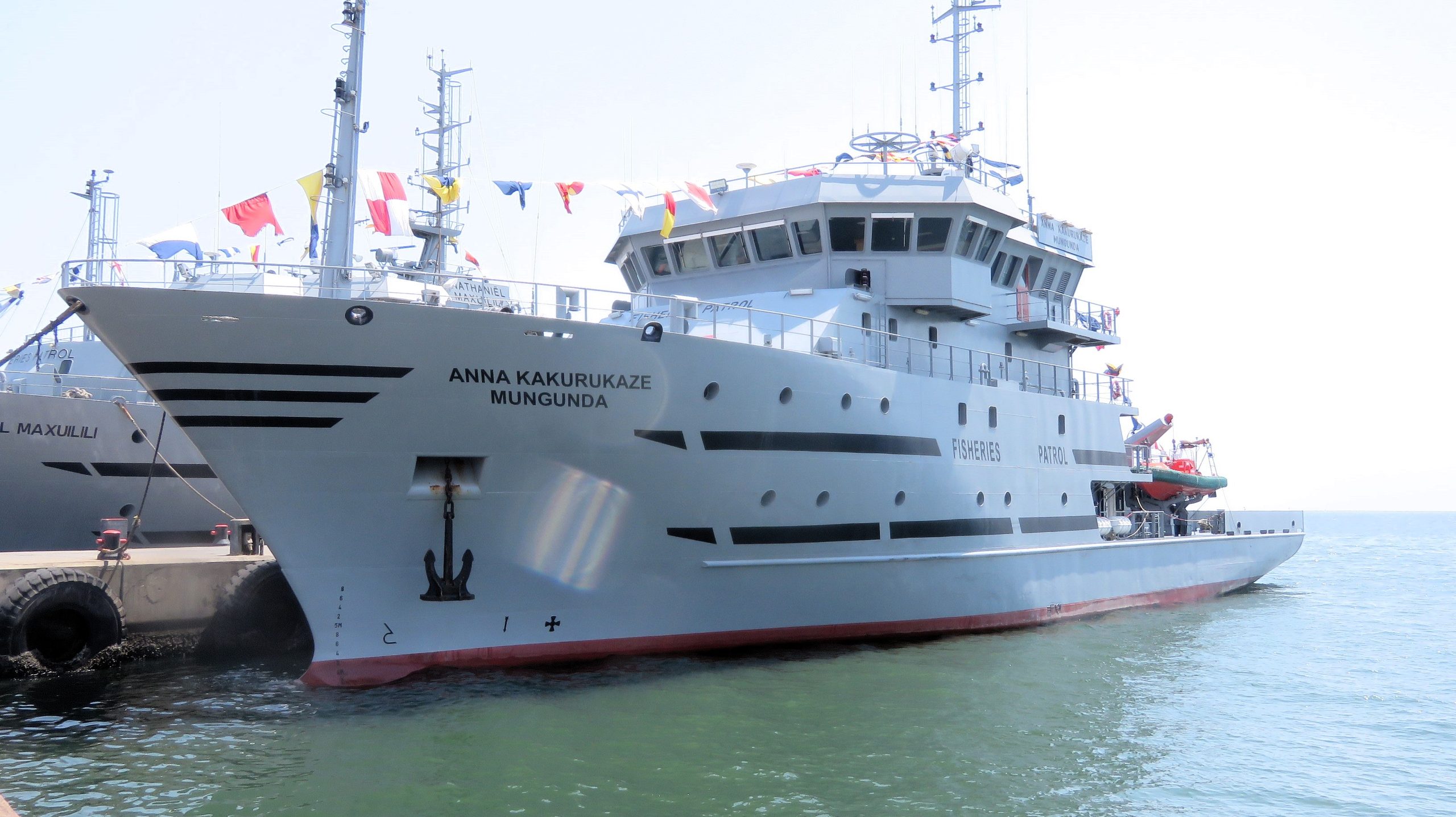
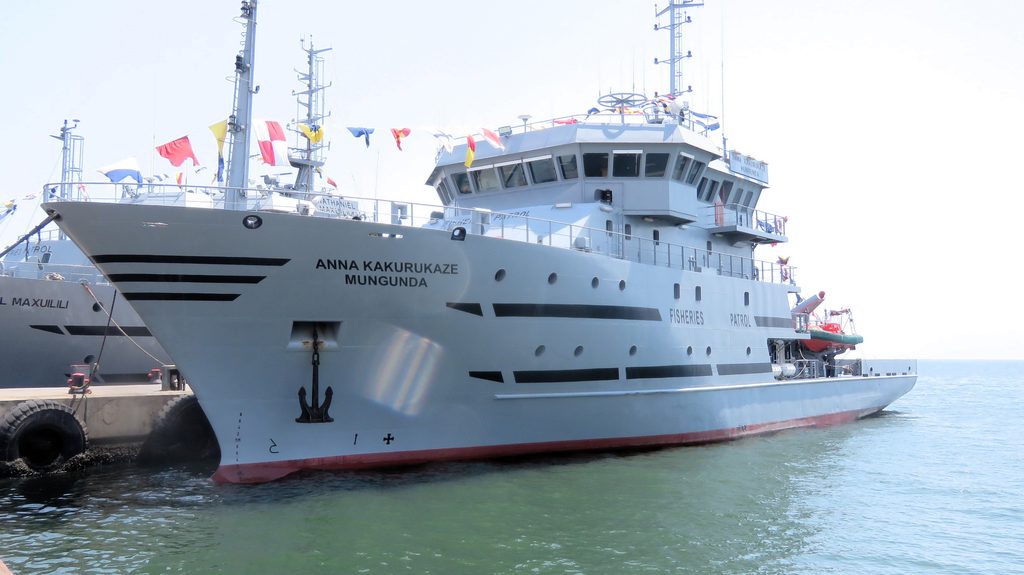
Namibia’s fisheries patrol vessel Anna Kakurukaze Mungunda that was used in the Joint Sea-Based Monitoring, Control and Surveillance Operation
A landmark joint patrol between Namibia and South Africa has ended after 25 days at sea, with inspectors recording 94 vessel sightings, boarding 12 fishing vessels, detecting 12 infractions, issuing five fines, detaining one vessel and seizing 32 tonnes of fish.
The first-ever Namibia–South Africa Joint Sea-Based Monitoring, Control and Surveillance (MCS) Operation has been hailed as a major step in the two countries’ efforts to strengthen fisheries enforcement and combat Illegal, Unreported and Unregulated (IUU) fishing.
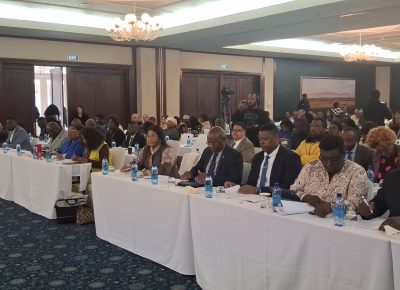
The operation concluded in Walvis Bay, where officials and crew members gathered for the closing ceremony of the month-long mission conducted under the two countries’ Memorandum of Understanding on Fisheries and Aquaculture. The figures from the operation underline the scale of the monitoring effort. The patrol recorded 94 vessel sightings, while 12 fishing vessels were boarded and inspected. Inspectors detected 12 infractions, with five fines issued and one vessel detained and arrested. A total of 32 tonnes of fish were seized.
The operation also monitored 76 foreign vessels transiting through South African waters. Despite rough seas and strong winds, inspectors maintained surveillance using technologies including Vessel Monitoring Systems (VMS), Automatic Identification Systems (AIS) and radar. For the officials involved, however, the operation was not only about enforcement. Namibia’s fisheries patrol vessel Anna Kakurukaze Mungunda covered nearly 3 000 nautical miles, operating across both Namibian and South African Exclusive Economic Zones.

Namibian National Controller Rosalia Mupetami said the operation went beyond simply putting a patrol vessel to sea. “This operation was never merely about patrols at sea. It was about strengthening our collective capability to protect shared fisheries resources and advance sustainable governance,” she said. Mupetami described it as a “classroom at sea”, giving young inspectors practical experience in vessel boarding, evidence collection and working within a multinational enforcement operation.
She said developing competent and confident fisheries inspectors would be critical to the sustainability of future Monitoring, Control and Surveillance operations. “The real measure of this operation will be what we do with what we have learned,” Mupetami said. South Africa’s Marisa Kashorte, Director of International Relations at the Department of Forestry, Fisheries and the Environment, said the operation represented more than the conclusion of a maritime mission. Kashorte emphasized that the patrol was “far more than the conclusion of a successful maritime mission. It is a celebration of partnership, trust, and what neighbouring nations can achieve when they commit to a shared vision for sustainable ocean management.”
She stated that the operation was conducted under the framework of a Memorandum of Understanding on Fisheries and Aquaculture, which has enabled both countries to move from policy commitments to practical implementation. Kashorte highlighted partnership, trust and a shared commitment to sustainable ocean management as key outcomes of the cooperation. Namibia’s Hafeni Mungungu, Director of Operations in the Ministry of Agriculture, Fisheries, Water and Land Reform and co-chair of the MCS Sub-Committee, also stressed the importance of coordinated enforcement and information sharing between the neighbouring countries. The operation exposed the importance of ensuring that enforcement action is followed through the prosecution process. Among the recommendations emerging from the mission are stronger intelligence integration, standardised enforcement procedures and expanded inspector training.
The joint patrol follows commitments made during the July 2026 Namibia–South Africa Bi-National Commission, where both countries reaffirmed cooperation in fisheries, aquaculture, maritime governance and environmental protection. The cooperation will continue, with South Africa scheduled to host the Joint Technical Committee meeting in October 2026 to review the operation and chart future initiatives. For Namibia and South Africa, the first joint patrol has moved fisheries cooperation from agreements on paper to enforcement at sea, putting vessels, inspectors and technology together in the fight to protect one of the region’s most valuable shared resources.
By Rudi Bowe