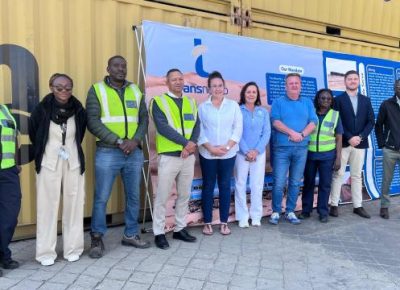
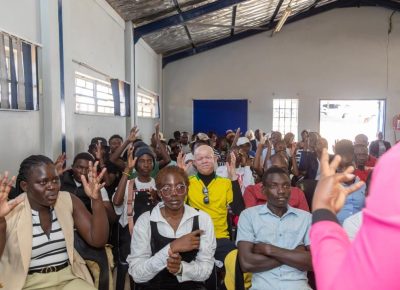
Ministers and officials from Namibia, Zambia and the Democratic Republic of Congo (DRC) met at the Tripartite Council of Ministers meeting of the Walvis Bay–Ndola–Lubumbashi Development Corridor (WBDLDC) to discuss ways to improve trade, transport efficiency and regional cooperation along the strategic corridor.
The WBDLDC is a corridor management institution comprising the three member states and was established to facilitate the movement of goods and people by simplifying and harmonising transport and border requirements. The initiative aims to reduce transportation costs and transit times while promoting regional trade and economic integration.
Speaking at the meeting in Swakopmund, Zambian Deputy High Commissioner to Namibia Lloyd Himaambo said the Tripartite Meeting provides an important platform for addressing corridor challenges, fostering regional integration and promoting collaborative development among the member states. Himaambo noted that it has been three years since the last Tripartite Council of Ministers meeting, which was held on 9 March 2023 in Livingstone, Zambia. “This gap is quite significant, especially considering the dynamic and rapidly evolving nature of the transport and logistics sector,” he said. He added that the SADC region and global economy have experienced significant changes, including shifts in trade, technological developments and emerging challenges, highlighting the importance of maintaining regular dialogue and coordination among the corridor countries.
Himaambo also expressed appreciation to the Government of the Democratic Republic of Congo for its continued commitment to the development of the corridor. “We recognise and commend the DRC’s persistent efforts and strategic initiatives in enhancing the security environment along the transit routes in the country, which are critical for the safe movement of cargo and drivers,” he said. He added that maintaining these security measures requires sustained collaboration and shared responsibility among all stakeholders to ensure the continued safety of cargo, drivers and infrastructure along the corridor. Meanwhile, Namibia’s Minister of Works and Transport, Veikko Nekundi, said Namibia has been allocating resources since 2010 to sustain the WBDLDC Interim Secretariat through the Walvis Bay Corridor Group as part of its commitment to the corridor agreement. “This commitment has been instrumental in facilitating and promoting trade along the corridor, within the SADC region and beyond,” Nekundi said. He added that several objectives of the agreement have already been achieved, including the implementation of 24-hour operations at the Namibia–Zambia border, which has improved the movement of goods. However, Nekundi said a number of key issues still need to be addressed.
These include the development of a corridor performance monitoring system, the establishment of One-Stop Border Posts at Katima Mulilo and other borders along the corridor, the development of an integrated bond guarantee system, and the development of truck ports and inland logistics hubs. Other priorities include the harmonisation of legislation and standards among the three member states, collaboration with SACU on the Preferred Trader Programme, and the implementation of the User Pay Principle (UPP). In line with the 2023 ministerial decisions, Namibia was tasked with ensuring the establishment of a Permanent Secretariat for the corridor.
Nekundi announced that preparations have been completed, and the secretariat is expected to become fully operational on 1 April. A task team comprising representatives from the Ministry of Works and Transport, the Roads Authority, the Namibia Revenue Agency (NamRA), and the Walvis Bay Corridor Group has finalised the necessary activities, including the development of a roadmap, hosting agreement and funding mechanisms. To support the institution financially, Nekundi said government will introduce a User Pay Principle levy of 90 cents per ton on all cross-border cargo transported along the corridor, which will come into effect on 1 April.
He emphasised the need for continued investment in transport infrastructure such as roads, railways and modern border facilities to improve efficiency and reduce travel times. Nekundi also called for digitalisation of customs and border processes, including electronic documentation and One-Stop Border Posts, to speed up cargo movement. He further stressed that regional cooperation among corridor countries remains essential, noting that harmonised policies and shared information systems would help ensure smoother and more efficient movement of goods.
The Walvis Bay–Ndola–Lubumbashi Development Corridor Agreement, signed on 5 March 2010, provides that meetings of the Council of Ministers should be held annually on a rotational basis among the member states to ensure effective coordination and oversight of the corridor’s development.
By Sharlien Tjambari