President Netumbo Nandi-Ndaitwah has raised alarm over declining fish stocks, warning that Namibia’s fisheries sector is facing increasing sustainability pressures.
Speaking during her State of the Nation Address, the President acknowledged a general downward trend in key regulated species under the Total Allowable Catch (TAC) system. She said recent scientific assessments indicate that several commercially important fish stocks are under strain despite the country’s continued commitment to science-based fisheries management. “While the country continues with science-based fisheries management, recent stock assessments reveal that several key commercial species are under increasing pressure,” she said. The President stressed that the findings highlight the urgent need for adaptive management strategies and stronger conservation measures to safeguard the sector’s long-term viability and the livelihoods it supports. She confirmed that government has initiated a review of harvesting control rules across all subsectors and is developing updated management plans for all TAC-regulated species.
A 2024 survey focusing on horse mackerel and small pelagic species revealed an 8% decline in horse mackerel biomass, alongside only a fragile recovery in sardine stocks. The study also pointed to operational challenges linked to environmental anomalies affecting the marine ecosystem. Conducted annually between March and April, the survey covers the northern Benguela Current ecosystem and assesses species abundance, biomass, and distribution. The results are used to guide sustainable catch limits for the following fishing season. Despite these challenges, the President noted ongoing efforts to strengthen the sector through local value addition policies. She highlighted the implementation of the 70:30 policy ratio, which requires a significant portion of fish quotas to be processed onshore to boost employment and economic returns.

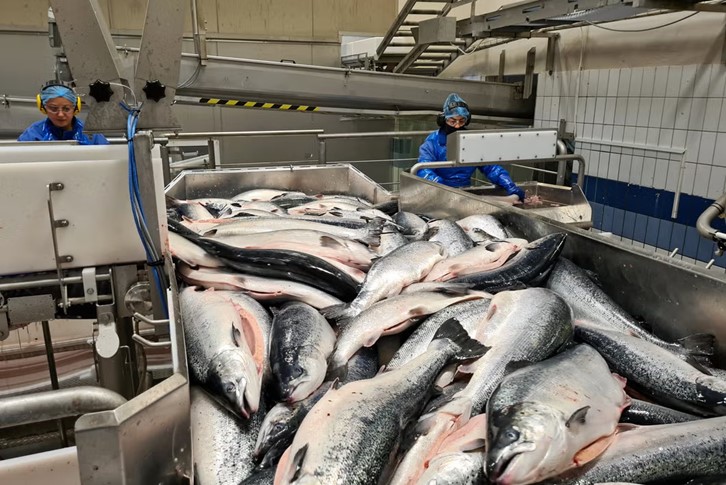
According to the President, species such as monkfish are now fully processed locally, while hake processing has reached 80%, with full localisation expected in the near future. The fishing industry remains a critical pillar of Namibia’s economy, contributing 4.1% to gross domestic product, generating N$14.3 billion in export earnings, and supporting more than 21 000 direct jobs. President Nandi-Ndaitwah emphasised that protecting marine resources is essential to sustaining these economic benefits, calling for a balanced approach that ensures both conservation and continued industry growth.
By Rudi Bowe