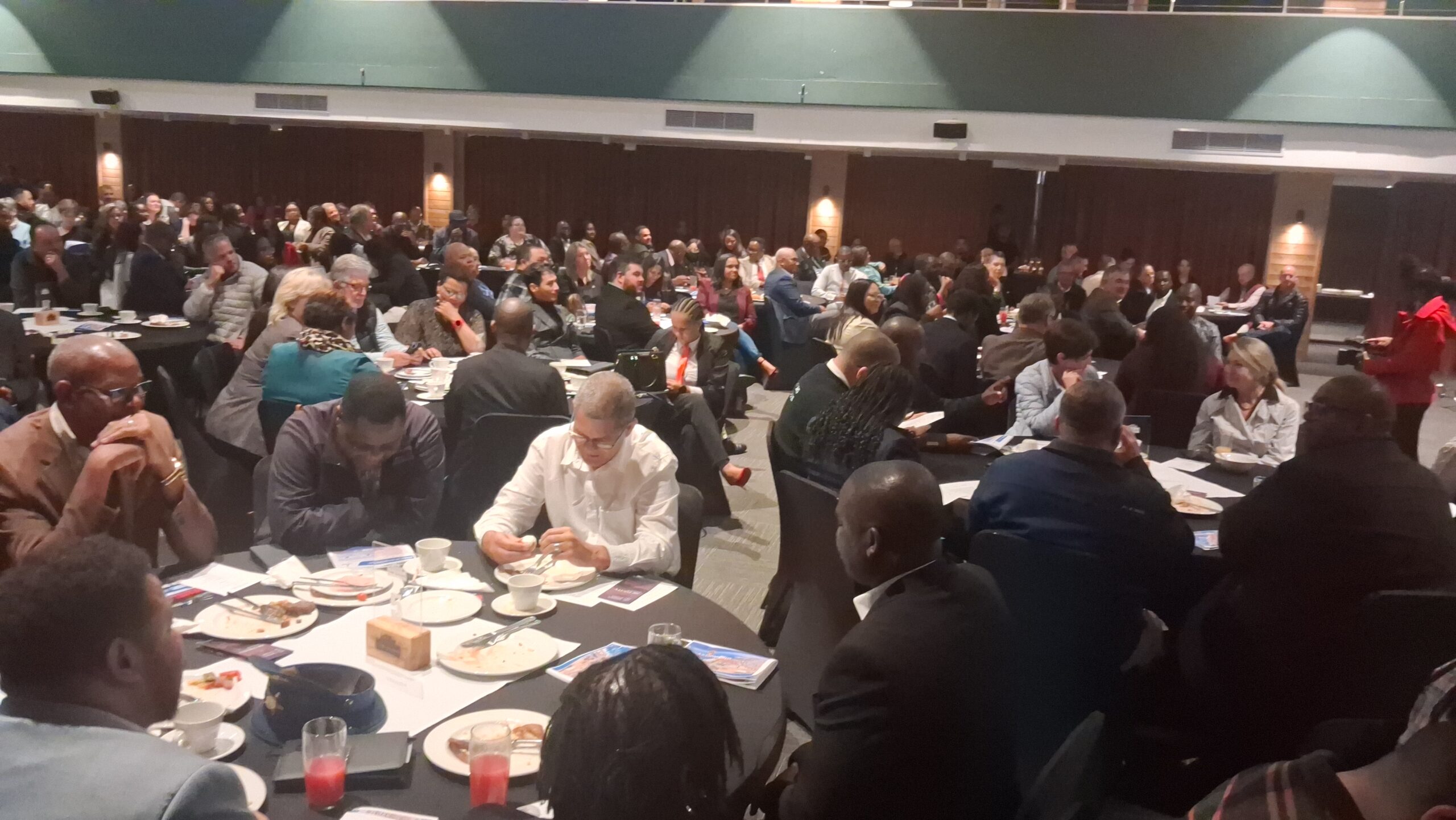
Swakopmund is looking beyond tourism as it seeks to create more jobs, attract investment, and build a more resilient local economy through emerging industries such as renewable energy, manufacturing, technology, and education.
This was the central message at the Swakopmund Annual Business Breakfast Meeting held on Friday(10 July) under the theme “The Next Wave: Turning New Industries into Coastal Prosperity.” The event brought together business leaders, investors, government officials, and development partners to discuss opportunities for economic growth. Opening the event, Mayor Suama Kautondokwa said Swakopmund is well positioned to become a hub for tourism, logistics, renewable energy, technology, investment and entrepreneurship, but stressed that success will depend on strong partnerships between the municipality and the private sector.
“Our collective responsibility is to ensure that this growth translates into tangible benefits for our businesses, our workforce and the wider community,” she said.
Kautondokwa said the municipality remains committed to creating a business-friendly environment through sound infrastructure, efficient service delivery and investment facilitation while encouraging collaboration to stimulate local economic development. Keynote speaker and Swakopmund Chief Executive Officer Archie Benjamin said the town can no longer depend solely on tourism for future growth. “We said Swakopmund will not survive on tourism going forward. We need to identify other development pillars,” Benjamin said. He explained that the municipality’s long-term development strategy identifies diversified tourism, quality education, light manufacturing, urban agriculture and smart city development as the sectors expected to drive future growth. Benjamin said Swakopmund’s population has increased from about 45 000 in 2011 to more than 75 000 today, placing greater pressure on infrastructure and housing.
He acknowledged that land servicing, funding and rapid population growth remain major challenges, but said the municipality has a clear development plan and continues to invest in roads, sewer infrastructure and other essential services. Benjamin highlighted several investment opportunities, including housing developments, renewable energy projects, desalination, technology, education facilities and healthcare.
Among the proposals is the development of an international convention centre along the beachfront and a specialised international hospital to reduce the need for patients requiring specialised treatment to travel hundreds of kilometres for medical care.
To make investing easier, Benjamin said the municipality has established an investment pipeline that enables investors to submit proposals electronically, with qualifying applications receiving council decisions within approximately one month. He also revealed that between 2020 and 2026, the municipality spent about N$877 million on procurement, with 91% of contracts awarded to local businesses, supporting local economic activity and job creation. The breakfast meeting also featured presentations from the Namibia Revenue Agency (NAMRA), which encouraged businesses to take advantage of the government’s tax amnesty programme. NAMRA Western Region Domestic Taxes Regional Manager Rebecca Uusiku said businesses currently owe the revenue agency about N$6.3 billion in unpaid taxes, penalties and interest.
She urged businesses to regularise their tax affairs by paying outstanding tax capital, which would allow qualifying taxpayers to benefit from the waiver of penalties and interest. “Tax compliance becomes more than a legal requirement. It becomes a foundation for business confidence, fair competition and sustainable national development,” Uusiku said. The business breakfast is an annual platform for strengthening cooperation between the municipality, government institutions and the private sector as Swakopmund prepares for economic opportunities linked to Namibia’s growing energy, mining and industrial sectors.
By Sharlien Tjambari