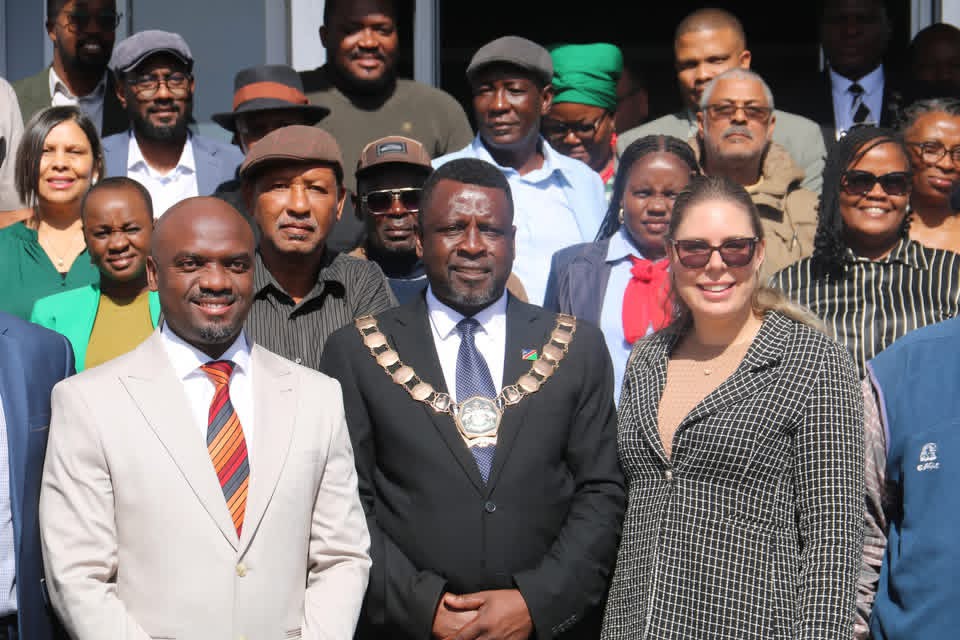
Walvis Bay is emerging as a key player in Namibia’s transition toward a green energy future, with renewed focus on the town’s role in driving the country’s green hydrogen ambitions. This formed the backdrop of a two-day stakeholder workshop hosted in Walvis Bay, where government, industry representatives, and community stakeholders gathered to align regional priorities with national development plans.
Opening the session, Walvis Bay Mayor Johannes Shimbilinga highlighted the town’s strategic importance as both a logistics hub and a gateway to regional trade. “This town plays a pivotal role in enabling economic growth, ensuring that Walvis Bay is firmly positioned at the forefront of Namibia’s green hydrogen transition,” he said. The workshop, organised by the Namibia Green Hydrogen Programme, was aimed at fostering collaboration and ensuring that regional needs are integrated into the country’s broader industrial roadmap.
The programme, led by the Government of Namibia in partnership with the Environmental Investment Fund, is focused on identifying infrastructure bottlenecks and prioritising projects that could shape the region’s economic landscape for decades to come. International backing is also playing a significant role. Support from the Climate Investment Funds has positioned Namibia among the top applicants in its Industrial Decarbonisation Programme, with the potential to unlock up to US$1 billion in investment. Beyond the scale of funding, the initiative is expected to deliver tangible benefits at community level. Projections indicate that the green hydrogen sector could create up to 30 000 jobs, while policy frameworks require that at least 30% of project value be directed toward local micro, small and medium enterprises (MSMEs).

Addressing stakeholders, Joseph Mukendwa, interim head of the programme, emphasised Walvis Bay’s central role in advancing Namibia’s industrial transformation. “Walvis Bay is strategically positioned in driving green industrialisation for the country,” he said. The workshop brought together students, entrepreneurs, and traditional leaders, reflecting a broader push to ensure inclusive participation in the country’s energy transition.
By Eileen van der Schyff