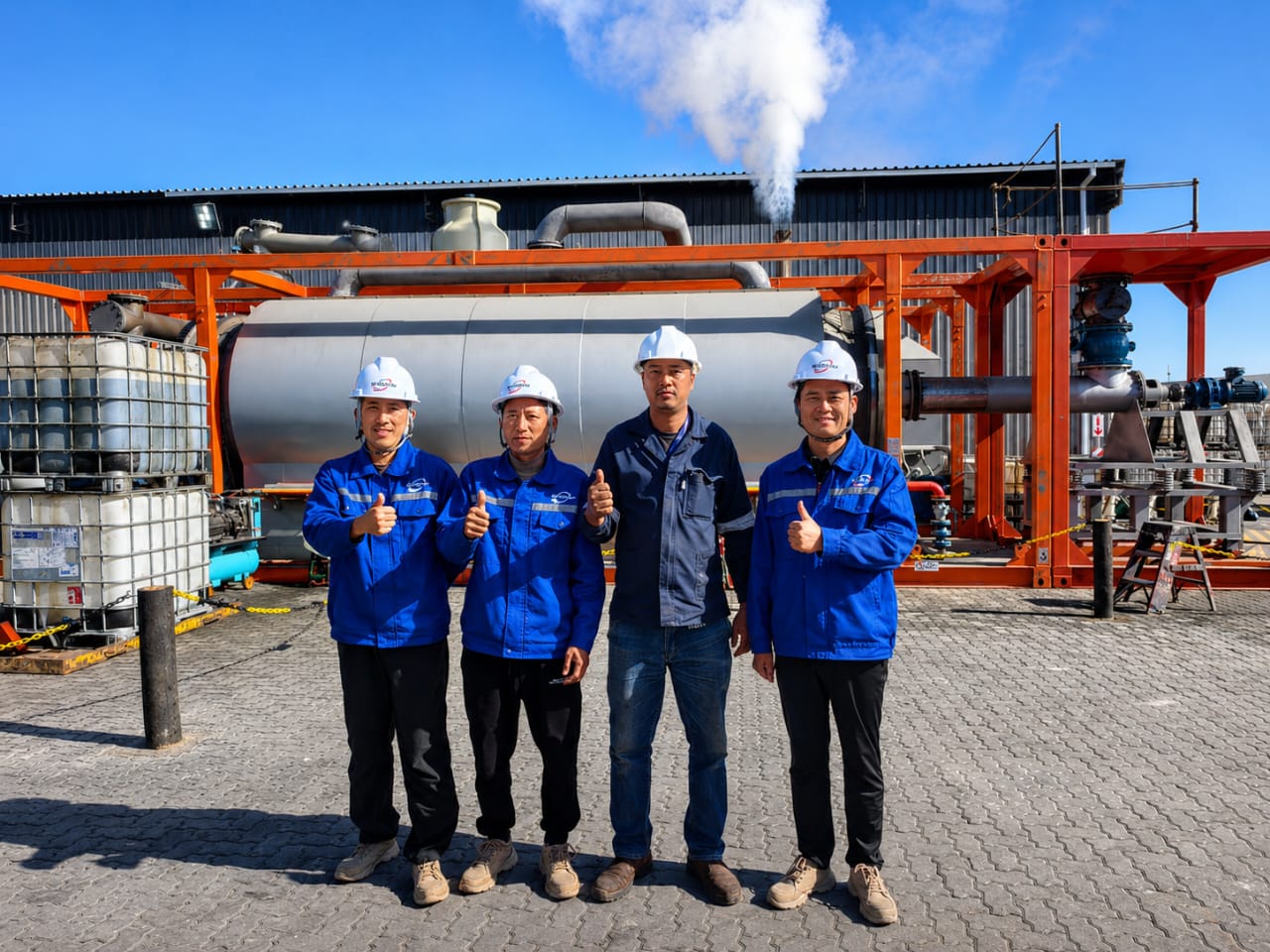
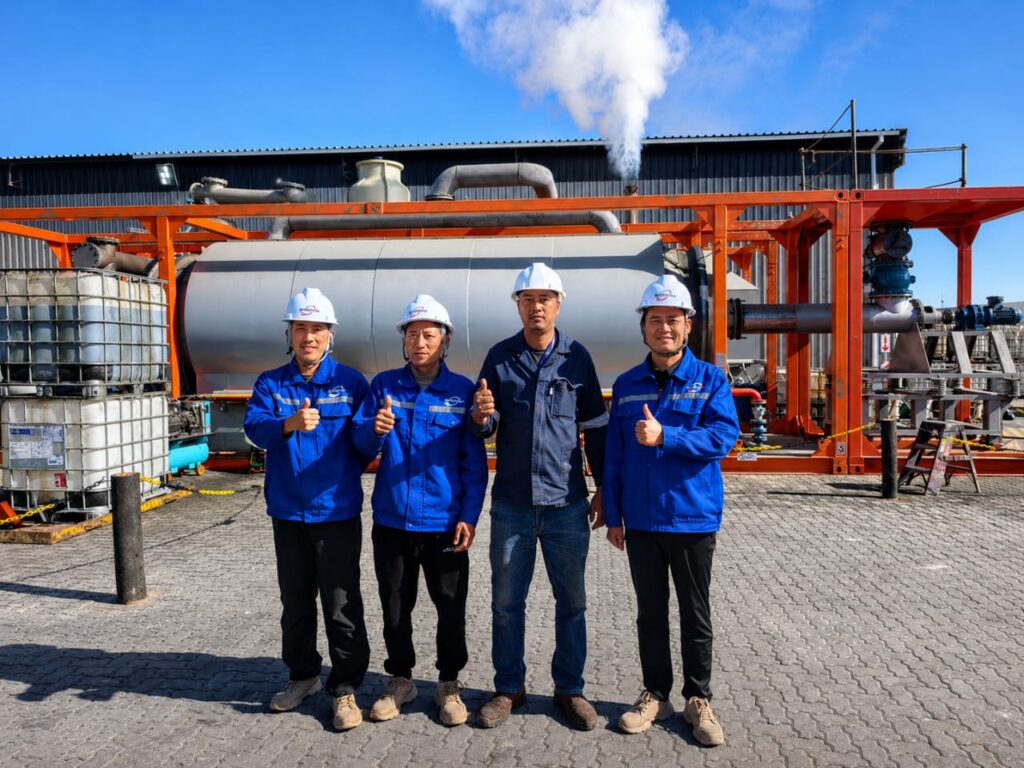
Photo: Enrico Cloete (third from left) of WESCO Waste Management stands with members of the commissioning team following the successful commissioning of Namibia’s first Thermal Desorption Unit (TDU), a milestone in the country’s hazardous waste treatment and environmental management capabilities.
WESCO Waste Management has commissioned Namibia’s first Thermal Desorption Unit (TDU), marking a significant milestone in the country’s hazardous waste management capacity and strengthening support for the rapidly growing oil and gas industry.
The pioneering facility is already operational in Walvis Bay, with a second unit expected to be commissioned in Lüderitz, positioning Namibia to treat hazardous industrial waste locally instead of relying on costly cross-border disposal and treatment. WESCO invested substantial amount in the acquisition, installation, commissioning, supporting infrastructure, training and compliance requirements associated with the project.
The state-of-the-art technology was recently showcased by WESCO Group Director George Fransman to representatives from State House, the Ministry of Mines and Energy and the Office of the President. The Thermal Desorption Unit is designed to treat hydrocarbon-contaminated waste, including oil-based drilling cuttings, oily sludge, contaminated soil and other industrial residues generated by sectors such as oil and gas, mining and marine services. Through a controlled heating process, the unit separates hydrocarbons and moisture from contaminated solids, allowing oil to be recovered while significantly reducing the volume of hazardous waste requiring disposal.

According to Fransman, the technology fills a critical gap in Namibia’s hazardous waste management infrastructure. Previously, much of this waste had to be stored for extended periods, disposed of at limited authorised facilities or exported for specialised treatment. “The commissioning of the TDU represents an important step forward in Namibia’s ability to manage hazardous industrial waste locally,” Fransman said. He added that the facility is already supporting major international energy companies operating in Namibia, including Chevron, TotalEnergies and Shell, by providing local treatment capacity for specialised waste streams generated during offshore oil and gas exploration. Beyond supporting industry, Fransman says the technology offers significant environmental benefits by reducing long-term storage of contaminated waste, lowering the risk of soil and groundwater pollution, recovering reusable hydrocarbons and reducing emissions associated with transporting hazardous waste across borders.
Fransman believes the investment will also generate economic benefits by retaining waste-treatment expenditure within Namibia, creating specialised jobs, developing local technical skills and strengthening the country’s environmental services sector. Fransman said the project forms part of its long-term vision to establish an integrated hazardous waste treatment network capable of supporting Namibia’s expanding mining, marine, manufacturing and energy industries. As oil and gas exploration accelerates, Fransman believes responsible environmental management must grow alongside industrial development. “Our vision is for Namibia to treat more of its own hazardous waste safely, recover more valuable resources, reduce environmental liabilities and build a specialised environmental services industry that supports sustainable national development,” Fransman said.
By Rudi Bowe