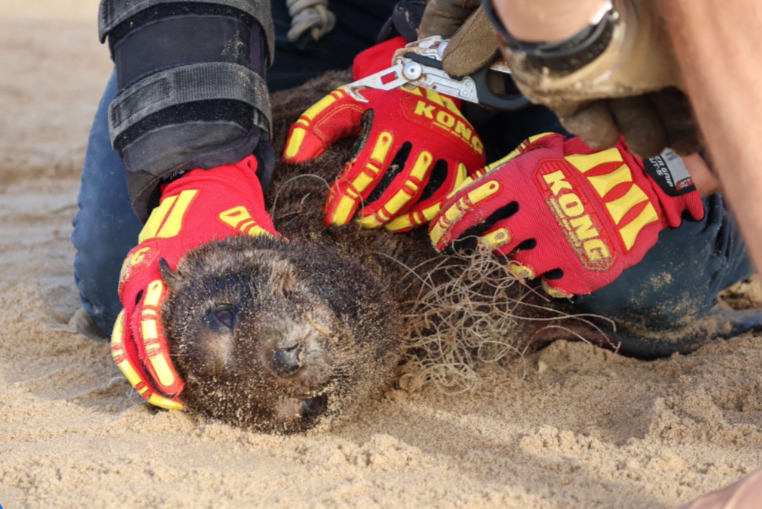
Photo: Gillnets like these can cause severe injuries to Cape fur seals when the animals become entangled. Photo by Ocean Conservation Namibia
Plastic pollution continues to pose a serious threat to Namibia’s marine life, even though many of the country’s beaches appear clean. This is according to Damian Schreiber, Marine Conservation Communications, Field and Research Officer at Ocean Conservation Namibia (OCN), in an interview with the Namib Times.
Schreiber said Namibia’s coastline is home to one of the richest marine ecosystems in the world, thanks to the nutrient-rich Benguela Current. However, millions of tonnes of plastic enter the world’s oceans every year, creating a hidden danger beneath the surface. “People often think our beaches are clean, so the problem is not that serious. But the plastic is in the ocean, and we see the effects every day through the seals we rescue,” he explained.
Ocean Conservation Namibia rescues Cape fur seals that become trapped in plastic loops, fishing line, nets and other marine waste. Namibia has the world’s largest Cape fur seal population, estimated at between 1.4 and 1.6 million animals. Up to 200 000 seals live at Cape Cross, the largest single Cape fur seal colony in the world. “Seals cannot remove plastic loops from around their necks. As they grow, the plastic cuts deeper into their bodies, and without rescue, most of these animals will eventually die,” Schreiber said.

By the end of June this year, OCN had rescued 265 entangled seals, with 145 rescues taking place during June alone. Sadly, one seal pup was found too late to be saved. Schreiber said rescue numbers usually increase during this time of the year because young seals are spending more time at sea and are naturally curious about floating objects. “This year, 78% of all the seals we rescued were pups younger than one year. They are the most vulnerable because they investigate anything floating in the water.” Fishing-related waste remains the biggest cause of entanglements.
Recreational fishing line, commercial fishing line and plastic packaging straps used to secure fish boxes were responsible for most of the rescues. “The worst injuries are caused by fishing line, nets and hooks. Packaging straps are also a major problem because they are often not disposed of properly and end up in the ocean,” Schreiber said. Although OCN rescued 436 seals by the end of June last year—almost 200 more than this year’s total—Schreiber warned that the lower number does not mean there is less plastic in the ocean. “Bad weather reduced the number of rescue opportunities, and we also saw fewer seals at some of the central coast colonies.
We do not yet know exactly why this happened. It could be linked to unusually hot weather, high pup mortality or even changes in where the seal populations are gathering.” He stressed that plastic pollution remains a major concern for all marine wildlife, not only seals. “Dolphins, whales and sea turtles are also affected by plastic pollution and fishing gear, but many of these animals die without ever being found.” Schreiber said better waste management, preventing the loss of fishing gear and disposing of fishing-related waste responsibly are essential if Namibia wants to reduce the number of animals injured or killed by plastic pollution.
By Eileen van der Schyff